Table of Contents

Discussions around artificial intelligence and employment are entering a more serious phase. For years, automation was largely associated with factory floors and routine manual work. Today, that narrative is changing. Industry experts are now warning that white-collar roles may face even greater disruption as artificial intelligence continues to advance.
In a recent discussion on the changing labor market, Gene Munster, Managing Partner at Deepwater Asset Management, stated that artificial intelligence is only scratching the surface when it comes to its impact on white-collar jobs. His comment reflects a growing consensus among technology and business leaders that the most profound effects of AI are still ahead.
This observation is not meant to provoke alarm, but it does highlight a structural shift that businesses can no longer ignore. As AI systems become more capable, they are beginning to influence knowledge-based work that was once considered resistant to automation. For organizations, the challenge is not simply about job loss or job creation. It is about understanding how work itself is being reshaped and how talent strategies must evolve in response.
Is your organization prepared for how AI will change white-collar work?
Assess Your AI Readiness
Why White-Collar Work is Facing Greater AI Exposure
White-collar roles are typically defined by cognitive tasks such as analysis, reporting, documentation, forecasting, decision support, and coordination. These activities rely heavily on structured information, repeatable processes, and pattern recognition. Modern AI systems are increasingly effective in precisely these areas.
Advances in machine learning, natural language processing, and data analytics have made it possible for AI tools to assist with or automate tasks. These tasks include reviewing contracts, analyzing financial data, generating reports, testing software, and handling complex customer interactions. In many organizations, AI is already embedded into daily workflows to quietly improve efficiency without drawing much attention.
What makes this shift particularly significant is scale. Unlike earlier automation technologies that were limited to specific environments, AI software can be deployed rapidly across departments, regions, and functions. This makes white-collar work more exposed to transformation than many traditional roles.
However, exposure does not automatically mean elimination. Instead, it signals a redefinition of responsibilities. Routine cognitive tasks are increasingly handled by AI systems, while human roles shift toward oversight, interpretation, strategy, and ethical judgment.
The Real Seriousness Behind Scratching the Surface
When Gene Munster refers to AI as scratching the surface, he is pointing to the early stage of a much larger transformation. Many of today’s AI deployments focus on efficiency gains and cost reduction. Yet the long-term impact will extend beyond operational improvements. As AI systems become more autonomous and integrated, they will influence how decisions are made, how risks are managed, and how value is created. This raises serious questions for businesses around governance, accountability, and long-term competitiveness.
Organizations that delay adapting their workforce strategies risk falling behind not because AI replaces people outright, but because competitors use AI more effectively. The seriousness lies in the pace of change and the uneven preparedness across industries.
The central issue is no longer whether AI will affect white-collar work, but whether businesses have the right expertise to guide that impact responsibly.
From Job Displacement to Talent Realignment
One of the most common misconceptions surrounding AI is that its adoption automatically reduces the need for skilled professionals. In reality, AI systems increase the demand for specialized talent.
Every AI solution requires professionals who can design models, prepare and manage data, integrate systems with existing platforms, ensure security and compliance, and monitor performance over time. Without these capabilities, AI initiatives often fail to deliver meaningful results. As a result, companies are moving away from broad, generalist hiring and toward targeted recruitment of AI-focused roles. This includes AI developers, machine learning engineers, data scientists, and AI solution architects.
Rather than shrinking teams across the board, organizations are reallocating resources toward high-impact roles that enable AI-driven transformation.
Do you have the right AI expertise to turn automation into a competitive advantage?
Build the Right AI Team
Why AI Developers are Becoming Critical to Business Strategy
While certain white-collar tasks are becoming automated, the professionals who build and manage AI systems are becoming increasingly valuable. AI developers play a central role in ensuring that automation aligns with business objectives rather than undermining them.
Poorly designed AI systems can introduce bias, compromise data security, and create regulatory risks. Skilled AI developers help organizations avoid these pitfalls by applying best practices in model development, validation, and deployment.
For business leaders, hiring AI developers is no longer a purely technical decision. It is a strategic investment that affects operational resilience, innovation capacity, and long-term growth.
However, finding and retaining experienced AI talent remains a challenge. Demand far outpaces supply in many markets, and traditional hiring approaches are often too slow or inflexible to meet evolving needs.
How Businesses Are Rethinking AI Talent Models
In response to these challenges, many organizations are exploring alternative ways to access AI expertise. Instead of building large in-house teams, they are adopting more flexible models that allow them to scale talent up or down based on project requirements.
Dedicated AI developers, hybrid delivery teams, and offshore expertise are increasingly seen as practical solutions. These models enable businesses to accelerate AI initiatives while maintaining cost efficiency and operational control.
The shift reflects a broader change in how technology teams are structured. Agility, specialization, and collaboration are becoming more important than rigid organizational hierarchies.
WeblineGlobal’s Perspective on the AI Workforce Transition
At WeblineGlobal, we view the current AI-driven transformation as an opportunity for businesses to build smarter, more adaptive teams. Our experience working with organizations across industries has shown that successful AI adoption depends as much on people as it does on technology.
Businesses often approach AI with clear goals but limited internal expertise. They need partners who understand both the technical and operational dimensions of AI implementation. This is where our role becomes relevant.
We help organizations access skilled AI development pods who can integrate seamlessly with existing teams. Our focus is on enabling practical AI adoption that delivers measurable value rather than experimental outcomes.
Bridging Strategy and Execution with AI Expertise
One of the most common gaps we observe is between AI strategy and execution. Many companies understand why AI matters, but struggle to translate that understanding into working systems.
WeblineGlobal addresses this gap by providing experienced AI professionals who are accustomed to working in real-world business environments. Our teams support a wide range of AI initiatives, including intelligent application development, data automation, predictive analytics, and AI-powered integrations.
We emphasize flexibility and collaboration, allowing businesses to adapt their AI efforts as priorities change. This approach reduces risk and ensures that AI investments remain aligned with long-term objectives.
Supporting Businesses Through Responsible AI Adoption
The transformation of white-collar work requires careful management. Organizations must balance efficiency gains with ethical considerations, workforce morale, and regulatory compliance.
Businesses can implement AI systems that enhance productivity without undermining trust by working with experienced AI developers. Transparency, accountability, and human oversight remain essential components of responsible AI use.
WeblineGlobal supports these principles by focusing on quality, security, and governance throughout the development lifecycle. Our goal is to help businesses adopt AI in a way that strengthens both performance and credibility.
Looking Ahead
The message behind recent discussions on AI and white-collar jobs is clear. The changes ahead are structural, not temporary. Organizations that recognize this early and invest in the right expertise will be better positioned to navigate uncertainty.
AI will continue to reshape how work is done, but its impact will ultimately be guided by human decisions. Businesses that combine intelligent systems with skilled professionals can turn disruption into sustainable advantages.
As AI continues to evolve beyond its current surface-level impact, the importance of experienced AI developers will only grow. Preparing for that future today is not just a technical choice, but a strategic one.
Are you hiring AI developers strategically or reacting too late to disruption?
Hire AI Developers Strategically
Social Hashtags
#AIJobs #WhiteCollarWork #AIDisruption #AIDevelopers #FutureOfWork #ArtificialIntelligence #AIWorkforce #AIHiring #TechnologyTransformation

Success Stories That Inspire
See how our team takes complex business challenges and turns them into powerful, scalable digital solutions. From custom software and web applications to automation, integrations, and cloud-ready systems, each project reflects our commitment to innovation, performance, and long-term value.
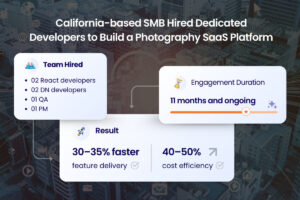
California-based SMB Hired Dedicated Developers to Build a Photography SaaS Platform
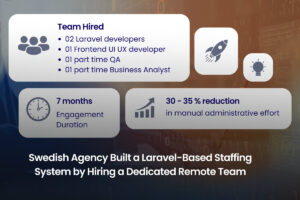
Swedish Agency Built a Laravel-Based Staffing System by Hiring a Dedicated Remote Team