

Table of Contents

How Did We Encounter the DeviceActivity Threshold Failure in a Productivity App?
During a recent project within the EdTech and digital wellbeing industry, our engineering team was tasked with building a sophisticated screen time and focus management application. The platform relies heavily on Apple’s Screen Time APIs, specifically leveraging the FamilyControls, DeviceActivity, and ManagedSettings frameworks to monitor device usage and enforce custom focus schedules.
While testing on a preview iOS beta environment, we realized that our core functionality was failing silently. Our architecture dictated that once a user spent a designated amount of time on heavily restricted applications, the system should trigger an extension to deploy a protective UI shield over those apps. We successfully initialized the monitoring schedule in the main app without errors. The permissions were granted, the application tokens were properly captured, and logs indicated a healthy setup.
However, we encountered a situation where the eventDidReachThreshold delegate method inside our DeviceActivityMonitorExtension absolutely refused to fire. Users could seamlessly bypass their time limits, no system notifications appeared, and the application shields remained dormant. Because this extension is the backbone of the application’s restriction logic, this silent failure posed a significant production risk. This challenge inspired the article so other mobile engineering teams can avoid the common pitfalls associated with app extensions, shared containers, and strict sandbox constraints when building screen time solutions.
Why Does the Architecture Rely on DeviceActivity and FamilyControls?
In modern iOS development, direct access to a user’s app usage history is heavily restricted for privacy reasons. The business use case for this productivity platform required tracking usage of distracting applications and blocking them dynamically based on user-defined limits (e.g., “Allow only 30 minutes of social media per day”).
To achieve this securely, Apple provides a decoupled architecture. The main application requests permissions via FamilyControls and configures a DeviceActivitySchedule. When the schedule begins, ends, or hits a threshold, the OS wakes up an independent background process known as the DeviceActivityMonitorExtension. This extension operates in a highly restricted sandbox and is responsible for making changes to the ManagedSettingsStore, such as applying application shields.
If you are looking to scale similar digital wellbeing or enterprise MDM solutions, organizations often look to hire software developer resources who deeply understand these sandboxed, inter-process communication lifecycles.
What Symptoms Indicated the DeviceActivityMonitorExtension Was Failing?
Diagnosing issues in app extensions is notoriously tricky because they run independently of the main application lifecycle and debugger. The symptoms we faced were baffling:
- Main App Success: The startMonitoring method threw no errors. Logs clearly printed “Monitoring started successfully.”
- Valid Tokens: We verified the application tokens being passed into the event payload were valid and not dummy data.
- Extension Silence: Despite reaching the defined time limits, the OS never invoked eventDidReachThreshold. Furthermore, forcibly setting store.shield.applicationCategories = .all() inside the extension did nothing.
- Entitlements Appeared Correct: Both the main app and the extension targets shared identical entitlements for com.apple.developer.family-controls and an explicit App Group (e.g., group.com.generic.screentime).
Because the main application behaved perfectly, we knew the architectural oversight lay within the handoff between the OS scheduler, the App Group shared container, and the extension’s execution environment.
How Did We Troubleshoot the Screen Time API Threshold Failures?
We systematically isolated the variables, keeping in mind the idiosyncrasies of testing beta OS releases. We considered and tested the following alternative solutions:
Solution Approach 1: Re-provisioning and Restarting for Beta Quirks
Beta environments are notorious for caching stale extension states. We considered that the background task scheduler was simply failing at the OS level. We implemented a clean build process, purged derived data, wiped the test device, and recreated the provisioning profiles via TestFlight distribution. While this resolved some initial setup instability, the threshold event still refused to fire.
Solution Approach 2: Verifying Shared App Group Initialization
We considered that the ManagedSettingsStore was instantiating correctly in memory but writing to the wrong sandbox location. By default, an unparameterized ManagedSettingsStore() writes to the main app container, which the extension cannot modify securely under strict Screen Time rules. We evaluated passing the exact App Group identifier to the store’s initializer to force cross-process consistency.
Solution Approach 3: Timezone Explicit DateComponents Configuration
We investigated how the DeviceActivitySchedule was being parsed. We considered that generating DateComponents using merely hour, minute, and second components from midnight without explicitly assigning a TimeZone or Calendar to the components was causing the underlying scheduler to interpret the threshold in UTC instead of the user’s local time, effectively shifting the threshold by several hours.
Solution Approach 4: Memory Profiling the Extension
App extensions have aggressively low memory limits (often capped around 15MB-30MB depending on the extension type). We considered that our extension was crashing on launch due to memory pressure before it could execute the threshold logic. We attached the debugger directly to the extension process to monitor the memory footprint upon invocation.
Through these diagnostic steps, we identified the root cause as a combination of Solution 2 and Solution 3. The schedule was failing due to implicit timezone discrepancies in the DateComponents, and the ManagedSettingsStore lacked the explicit App Group context required to mutate shield settings from within the extension.
What Was the Final Implementation to Ensure Accurate Screen Time Shielding?
To resolve the issue reliably, we rewrote the schedule configuration to enforce timezone strictness and reconfigured the extension to utilize a named ManagedSettingsStore tied strictly to the App Group. For companies planning to hire iOS developers for custom mobile applications, validating these subtle cross-process boundaries is critical for a stable production release.
Updating the Main App Configuration
We modified the main app’s monitoring function to ensure absolute clarity in the date components:
func startMonitoring(selection: FamilyActivitySelection, limitHours: Int, limitMinutes: Int) {
    monitor.stopMonitoring()

    let now = Date()
    var calendar = Calendar.current
    calendar.timeZone = TimeZone.current // Explicitly enforce local timezone

    let midnight = calendar.startOfDay(for: now)
    guard let nextMidnight = calendar.date(byAdding: .day, value: 1, to: midnight) else { return }

    // Explicitly inject calendar and timezone into components
    let startComponents = calendar.dateComponents(in: calendar.timeZone, from: midnight)
    let endComponents = calendar.dateComponents(in: calendar.timeZone, from: nextMidnight)

    let schedule = DeviceActivitySchedule(
        intervalStart: DateComponents(hour: startComponents.hour, minute: startComponents.minute),
        intervalEnd: DateComponents(hour: endComponents.hour, minute: endComponents.minute),
        repeats: true
    )

    let threshold = DateComponents(hour: limitHours, minute: limitMinutes)
    let activity = DeviceActivityName("generic.monitor.activity")
    let event = DeviceActivityEvent(
        applications: selection.applicationTokens,
        threshold: threshold
    )

    do {
        try monitor.startMonitoring(
            activity,
            during: schedule,
            events: [DeviceActivityEvent.Name("generic.limit.event"): event]
        )
        print("Monitoring initialized securely.")
    } catch {
        print("Failed to start monitoring: (error.localizedDescription)")
    }
}
Updating the Extension Implementation
We updated the extension to explicitly reference the App Group when instantiating the ManagedSettingsStore. This ensures the shield configurations applied by the extension actually reflect across the entire iOS system.
class DeviceActivityMonitorExtension: DeviceActivityMonitor {
    // Explicitly bind the store to the shared App Group
    let store = ManagedSettingsStore(named: .init("group.com.generic.screentime"))

    override func eventDidReachThreshold(_ event: DeviceActivityEvent.Name, activity: DeviceActivityName) {
        super.eventDidReachThreshold(event, activity: activity)

        // Apply the shield logic securely
        store.shield.applicationCategories = .all()

        // Log to unified logging system for debugging without Xcode attached
        let logger = os.Logger(subsystem: "com.generic.screentime", category: "MonitorExtension")
        logger.notice("Threshold reached successfully. Shields applied.")
    }
}
What Are Key Architectural Lessons for Mobile Engineering Teams?
Resolving this challenge provided several critical takeaways that emphasize the importance of rigorous system design when you hire swift developers for system extensions.
- Strict Entitlement Parity: App Extensions and their host apps must possess strictly matched entitlements. A missing App Group identifier in the extension target will fail silently without compile-time errors.
- Explicit Environment Dependencies: Never rely on system defaults for DateComponents when dealing with OS-level background schedulers. Always explicitly define the Calendar and TimeZone.
- Shared Container Instantiation: Frameworks like ManagedSettingsStore or UserDefaults must be explicitly initialized with your App Group identifier to share data across process boundaries.
- Beta OS Volatility: Screen Time APIs are highly sensitive to OS changes. Always test on the latest stable public release alongside beta testing to baseline functionality.
- Extension Logging Limitations: Because you cannot easily debug an extension that is triggered sporadically by the OS, leverage the OSLog framework. This allows you to view logs via the macOS Console app when the extension wakes up independently.
- Memory and Lifecycle Awareness: Extension execution time is aggressively truncated. Ensure that methods like eventDidReachThreshold return as fast as possible and do not perform synchronous network requests.
How Can Your Team Overcome Complex iOS Extension Challenges?
System-level APIs like FamilyControls and DeviceActivity demand an acute understanding of process isolation, memory management, and cross-target communication. This situation highlights that clean builds and error-free main applications are sometimes not enough; understanding the undocumented intricacies of iOS background execution is what separates average code from enterprise-grade software.
If you are planning to hire app developer to create a mobile app that requires deep system integrations, security compliance, or complex background processing, partnering with experienced professionals is essential to maintaining your delivery timelines and application stability. To learn more about our engineering capabilities, contact us.
Social Hashtags
#iOSDevelopment #Swift #ScreenTimeAPI #FamilyControls #DeviceActivity #ManagedSettings #SwiftUI #AppleDeveloper #MobileDevelopment #iOS18 #AppDevelopment #Xcode #SwiftDeveloper #iOSProgramming #SoftwareEngineering
Frequently Asked Questions
Extensions are separate processes invoked by the iOS operating system, not the Xcode run loop. To debug, you must go to Xcode's menu: Debug > Attach to Process by PID or Name, and wait for the OS to wake the extension.
No. FamilyControls and Screen Time APIs require actual device hardware and proper distribution provisioning profiles signed by an Apple Developer account with the correct entitlements approved by Apple.
Extensions have extremely low memory thresholds (frequently around 15MB). If you load heavy libraries or perform large database operations when the extension fires, the OS will terminate it silently to preserve system resources.
Ensure that the interval start and end times are valid, strictly in the future relative to the test, and utilize explicit TimeZone data. Also, verify that the host application has been granted Screen Time permissions by the user before the schedule is created.

Success Stories That Inspire
See how our team takes complex business challenges and turns them into powerful, scalable digital solutions. From custom software and web applications to automation, integrations, and cloud-ready systems, each project reflects our commitment to innovation, performance, and long-term value.
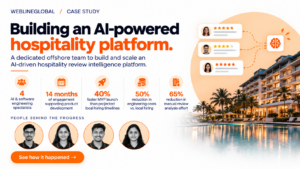
Hospitality Review Intelligence Product Development with Offshore AI Team
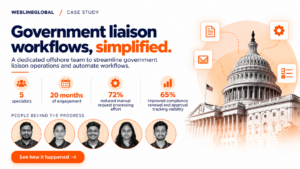
Government Liaison Operations Digitization with Dedicated Offshore Team