Table of Contents

Seattle remains the undisputed epicenter of cloud innovation, serving as the home turf for the industry’s two largest providers. For local startups and enterprises alike, the proximity to such immense talent and infrastructure is a competitive advantage. However, this environment often creates a gravity well that pulls engineering teams toward single-provider ecosystems. As Seattle based CTOs and VPs of enterprises look to scale, many are realizing that being “all-in” on one provider creates significant business risks, ranging from unpredictable pricing to limited architectural flexibility.
The challenge for engineering leadership today is not just about finding technical proficiency, but about sourcing engineers who understand how to build for portability. When you look to hire cloud engineers Seattle, the goal is increasingly focused on finding architects who can navigate a multi cloud strategy without sacrificing speed or security. This requires a shift in hiring philosophy, moving away from platform-specific specialists toward engineers who excel in cloud-agnostic tooling and infrastructure-as-code. This article serves as a strategic briefing on how to build these resilient teams while managing the high costs associated with the local Pacific Northwest talent market.
The Paradox of Cloud Hiring in the Seattle Tech Ecosystem
In the backyard of major cloud providers, the talent pool is exceptionally deep but often highly specialized in proprietary stacks. For a hiring manager, this creates a paradox where the most qualified local candidates may actually increase your risk of vendor lock-in because their expertise is deeply rooted in specific, non-portable services. When you hire cloud engineers Seattle, you are often competing with the providers themselves for talent, driving compensation packages to levels that can strain even the most robust venture-backed budgets.
Moving Beyond the Single-Provider Comfort Zone
The primary driver for seeking a cloud-neutral approach is long-term business agility. If your entire infrastructure is built on proprietary serverless functions or specific database engines, moving that workload becomes a multi-year migration project. Smart leaders are now asking prospective hires how they would design for portability from day one. This shift in evaluation criteria is essential for any multi cloud strategy to succeed. It requires engineers who are comfortable with abstraction layers and who prioritize open-source standards over proprietary convenience.
The Growing Risk of Proprietary Lock-In
Lock-in is often sold as a “managed service benefit,” but for a growing company, it can become a strategic bottleneck. If a provider changes their pricing model or deprecates a critical service, a locked-in team has zero leverage. By choosing to hire cloud & devops engineers who specialize in containerization and agnostic orchestration, Seattle firms can maintain the upper hand. The goal is to ensure that the infrastructure serves the product, rather than the product being shaped by the limitations of the infrastructure provider.
Cost Management in a Multi-Platform World
Managing costs across different providers is one of the most significant hurdles for Seattle teams. Each platform has its own billing nuances, and without dedicated cloud engineers Seattle who focus on FinOps, cloud spend can quickly spiral. Hiring for this specific intersection of finance and engineering is becoming a priority for CTOs who need to justify their infrastructure ROI to the board. It is no longer enough to just “keep the lights on,” engineers must proactively optimize for cost-per-workload across the entire ecosystem.
Planning Cloud Hiring Without Vendor Lock-In?
Seattle teams face rising cloud costs and hidden vendor risks. Talk to a cloud hiring strategist to see how leading companies build cloud-neutral teams using multi-cloud and Kubernetes expertise.
Defining the Right Skill Matrix to Hire Cloud Engineers Seattle
When interviewing for cloud roles in a high-density market like Seattle, the signal-to-noise ratio can be challenging. Many candidates hold multiple certifications from a single provider, which demonstrates effort but doesn’t necessarily prove they can build a portable architecture. To build a resilient team, your hiring criteria must prioritize foundational principles over platform-specific features. You need people who understand the “why” behind an architecture, not just the “how” of a specific dashboard.
Prioritizing Tooling Over Specific Platforms
The modern cloud engineer’s value lies in their ability to use tools that sit above the cloud layer. We are seeing a massive trend where Seattle teams specifically look for expertise in Terraform, Pulumi, or Kubernetes rather than just AWS CloudFormation or Azure Resource Manager. This is a deliberate choice to ensure that the team’s knowledge is an asset that belongs to the company, not a skillset that binds the company to a vendor. When you hire IT consultants to audit your roadmap, the first thing they look for is this layer of abstraction.
The Role of IaC and Kubernetes in Portability
Infrastructure as Code (IaC) is the bedrock of a cloud-neutral strategy. It allows a team to define their environment in a way that is repeatable and, with the right providers, relatively portable. Kubernetes has similarly become the “operating system” of the cloud, providing a consistent environment regardless of the underlying hardware or vendor. Hiring engineers who treat infrastructure as a software engineering discipline is the most effective way to ensure your team can pivot when the business requires it. It reduces the “special knowledge” silos that often form around specific cloud consoles.
Evaluating Communication and Documentation Skills
In a multi-cloud environment, complexity increases significantly. This makes soft skills, particularly documentation, a hard requirement. If an engineer builds a complex cross-cloud networking bridge but fails to document the routing logic, they have created a single point of failure. During the hiring process, WeblineGlobal recommends assessing a candidate’s ability to explain complex architectural trade-offs to non-technical stakeholders. This ensures the multi cloud strategy remains transparent and manageable as the organization grows.
Strategic Team Composition: Dedicated Cloud Engineers Seattle and Offshore Pods
Budget constraints in the Seattle area often force a choice between hiring one local “rockstar” or building a more balanced, distributed team. For most scaling companies, the latter is the more sustainable path. By combining local leadership with dedicated cloud engineers Seattle-managed remote pods, firms can achieve 24/7 coverage and specialized expertise without the prohibitive costs of a fully local 20-person team. This hybrid model allows for strategic decision-making to happen locally while execution scales globally.
Balancing Local Leadership with Global Delivery
The most successful Seattle engineering teams we have seen often keep their VP of Engineering and Lead Architects local, while leveraging remote talent for the heavy lifting of implementation and maintenance. This “pod” approach ensures that the high-level multi cloud strategy is aligned with the business goals, while the daily tasks of managing clusters, pipelines, and security patches are handled by a dedicated offshore team. This model, often referred to as RelyShore, provides the cost efficiency of India with the strategic oversight of the US.
Managing Time Zones and Communication for Velocity
A common objection to hiring remote cloud engineers is the time zone difference. However, in cloud operations, a 12-hour offset can be a massive advantage. While the Seattle team sleeps, the offshore pod can perform updates, monitor for anomalies, and handle routine maintenance. This “follow the sun” model ensures that your infrastructure is always being watched by someone who is fresh and focused. When you plan cloud neutral strategy, building in this global operational rhythm is a key differentiator for high-availability services.
Integrating Culture and Performance Standards
Distance should never be an excuse for a drop in quality. Leading Seattle firms integrate their remote cloud pods into their local Slack channels, Jira boards, and sprint cycles. This ensures that every engineer, regardless of location, feels ownership over the uptime and performance of the platform. At WeblineGlobal, we emphasize that dedicated cloud engineers Seattle must be treated as a true extension of the core team, sharing the same KPIs and architectural standards to maintain a cohesive environment.
Need Cloud Engineers Who Build for Portability?
If you’re struggling to hire cloud engineers in Seattle with real multi-cloud experience, we help you access vetted cloud & DevOps engineers skilled in Kubernetes, IaC, and cloud-agnostic architectures — without long-term lock-in.
Mitigating Delivery Risks in Multi-Cloud Transitions
Transitioning to a cloud-neutral or multi-cloud environment is not without its risks. Increased complexity can lead to security gaps, data egress costs, and slower deployment cycles if not managed correctly. Hiring managers must look for engineers who have a “security-first” mindset and who understand the network implications of moving data between different providers. The goal is to build a bridge, not a barrier, between your different cloud environments.
Ensuring IP Security and Compliance in Remote Teams
When you hire cloud engineers Seattle through a remote model, security and IP protection are paramount. Seattle-based companies, especially those in fintech or healthcare, have strict compliance requirements like HIPAA or SOC2. It is critical to work with a partner who has established protocols for data access, non-disclosure agreements, and secure development environments. WeblineGlobal prioritizes these protections, ensuring that your cloud infrastructure remains your proprietary asset while being managed by global talent. You should always review cloud hiring approach details regarding security before onboarding any remote resource.
The Impact of Latency and Egress on Architectural Decisions
One of the most frequent mistakes in multi-cloud hiring is neglecting the physical reality of data movement. A “neutral” strategy that ignores egress costs will quickly become a financial disaster. Your cloud engineers must be capable of calculating these costs and designing systems that minimize unnecessary data transfer between providers. This requires a deep understanding of VPC peering, dedicated interconnects, and regional data gravity. Hiring for this level of awareness separates the junior administrators from the senior architects.
Monitoring and Observability Across Platforms
A multi-cloud strategy is only as good as your visibility into it. If your Seattle team has to check three different consoles to understand the health of your application, your mean time to recovery (MTTR) will suffer. Dedicated cloud engineers should be tasked with building a unified observability stack using tools like Prometheus, Grafana, or Datadog. This “single pane of glass” is essential for making informed decisions about where to scale workloads based on performance and cost data.
Strategic Next Steps for Seattle Cloud Leaders
Building a cloud-neutral engineering team in Seattle is a journey that balances local expertise with global scale. As the market continues to evolve, the ability to pivot between providers will become a significant competitive advantage. By focusing on engineers who prioritize portability, leverage agnostic tooling, and understand the economics of the cloud, you can build an infrastructure that is both resilient and cost-effective. The key is to stop hiring for “what” a person knows about a specific platform and start hiring for “how” they think about distributed systems as a whole.
If you are currently evaluating your team composition, consider the long-term benefits of a distributed pod model. This approach allows you to retain your high-level strategic talent in the Pacific Northwest while tapping into the immense scale and technical proficiency of dedicated cloud engineers Seattle-managed pods in India. By diversifying your talent pool alongside your infrastructure, you create a dual layer of protection against both vendor lock-in and local labor market volatility. Contact us, and we help you with the best cloud hiring approach to ensure that your roadmap is built on a foundation of flexibility and high ROI.
Social Hashtags
#HireCloudEngineers #SeattleTech #HireDevelopers #MultiCloud #CloudHiring #DevOpsHiring #Kubernetes #CloudAgnostic #VendorLockIn #CloudStrategy #TechLeadership #CTOLife #EngineeringManagement #RemoteTeams #FinOps
Build a Cloud-Neutral Team Without Seattle Hiring Costs
Whether you need local cloud leadership or dedicated remote cloud engineers, we help Seattle companies scale with secure, compliant, and cost-efficient multi-cloud teams. Avoid vendor lock-in while accelerating delivery.
Frequently Asked Questions
The primary benefit is the combination of cost efficiency and scale. While Seattle has incredible talent, the competition drives costs to a point where scaling a full team locally is often unsustainable. Hiring from India allows you to build a larger, 24/7 engineering presence for 40 to 60 percent less than local costs, without sacrificing technical quality or delivery speed.
Complexity is managed through abstraction and automation. By hiring engineers who specialize in Infrastructure as Code (Terraform) and container orchestration (Kubernetes), you create a standardized way of managing different providers. This allows even a smaller team to manage multiple environments because the underlying processes are identical regardless of the vendor.
We use a multi-stage vetting process that includes technical assessments of their cloud-agnostic skills, communication evaluations, and cultural fit interviews. We focus on engineers who have experience in the RelyShore model, ensuring they can work seamlessly with US-based leadership and maintain the high standards required by Seattle tech firms.
Yes, absolutely. Dedicated remote engineers can focus specifically on FinOps tasks, such as right-sizing instances, managing spot markets, and optimizing storage tiers across different providers. In many cases, the cost savings they identify in your cloud bill more than cover the cost of their own salary, making them a high-ROI addition to your team.
We typically provide a shortlist of pre-vetted developer profiles within about 48 hours. Our goal is to move quickly from initial consultation to interviews, allowing you to scale your cloud team in days rather than the months it often takes to navigate the local Seattle hiring market.



Success Stories That Inspire
See how our team takes complex business challenges and turns them into powerful, scalable digital solutions. From custom software and web applications to automation, integrations, and cloud-ready systems, each project reflects our commitment to innovation, performance, and long-term value.
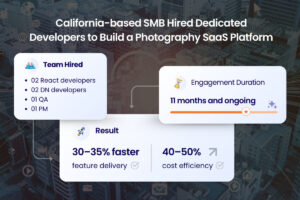
California-based SMB Hired Dedicated Developers to Build a Photography SaaS Platform
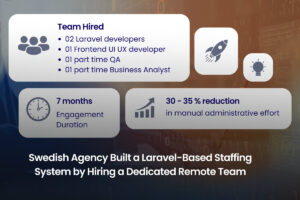
Swedish Agency Built a Laravel-Based Staffing System by Hiring a Dedicated Remote Team