

Table of Contents

Internal staffing processes drain corporate capital remarkably quickly. Companies spend thousands of dollars on monthly job board subscriptions, premium LinkedIn Recruiter licenses, and external talent acquisition agency fees. Human resource personnel waste dozens of hours sorting through unqualified resumes.
Technical leaders must stop their core architectural work to conduct multi-stage interviews. Every hour a senior engineering architect spends interviewing candidates represents lost product progress. These internal labor tracking costs rarely appear on standard department hiring budgets. Yet they significantly inflate the initial cost of hiring dedicated developers through traditional channels.
The financial drain continues during the prolonged negotiation phase. Candidates drop out late in the process, forcing teams to restart the search from scratch. This extended cycle multiplies the total acquisition cost well beyond initial estimates.
Worried hidden costs will make hiring dedicated developers harder to control?
The Hidden Costs of Traditional Developer Hiring
Hiring developers through traditional methods often brings costs that go far beyond salaries. Businesses spend significant time and money on recruitment, onboarding, training, and retention, which can quietly increase the overall investment required for building a strong development team.
Recruitment & Hiring Expenses
Hiring the right developers requires more than posting a job opening. The hiring process often creates additional costs that many businesses underestimate during team expansion.
Key expenses include:
- Job postings on premium hiring platforms
- Recruitment agency and head hunter fees
- Internal HR management and screening costs
- Time spent on technical interviews and assessments
- Delays caused by lengthy hiring cycles
Employee Benefits & Overheads
A base salary represents only a small fraction of full-time employment expenses. Companies must legally provide comprehensive health insurance, retirement contributions, and paid time off. Statutory taxes further elevate the financial burden on the organization. Payroll taxes, disability insurance, and workers’ compensation accumulate rapidly.
Total In-House Cost = Base Salary + Benefits (20-30%) + Taxes (10%) + Overhead (15%)
These mandatory expenditures add an extra 25% to 40% on top of the raw base salary. CFOs often overlook these compounding numbers during early-stage fiscal year budgeting.
Furthermore, annual bonuses and cost-of-living adjustments increase the baseline every single year. Parental leave and extended sick time create additional financial voids that the company must cover. When looking at the numbers, dedicated developers vs in-house team costs reveal a stark contrast. The external vendor handles every piece of employee overhead automatically.
Infrastructure & Software Costs
Every new internal engineer requires physical and digital assets to function at full capacity. High-end development laptops with powerful processors demand significant upfront capital. Corporate offices need physical desks, ergonomic chairs, and secure commercial real estate space.
Furthermore, modern engineering demands expensive enterprise software licenses. Integrated development environments, cloud sandboxes, and continuous integration tools require recurring monthly fees. Security compliance tracking software also adds to this computing bill.
When organizations hire dedicated developers, the external vendor absorbs these capital expenditures entirely. The client company avoids depreciation costs on hardware assets that lose value within three years. They also avoid complex software asset management audits.
Attrition & Replacement Costs
Software engineering suffers from high turnover rates globally. When a core developer departs, the financial blow hits the balance sheet twice. First, productivity drops to zero while the position remains vacant. Second, the company must repeat the entire costly recruitment cycle.
Knowledge transfer sessions take remaining developers away from their primary feature deadlines. New hires then require three to six months to reach optimum output levels. This onboarding lag represents a massive hidden expense for the company.
This cycle creates a massive, recurring financial leak that disrupts long-term financial planning. The organization loses momentum, misses market opportunities, and spends valuable cash on retraining.
Why Hiring Dedicated Developers Makes Financial Sense
Predictable Monthly Costs
A dedicated development team operates on a clear, legally binding contractual framework. Vendors issue flat monthly invoices based on fixed resource rates. This structure eliminates unexpected spikes in engineering expenditures.
CFOs can project cash runway with extreme precision over twelve or twenty-four months. There are no sudden requests for hardware upgrades or unexpected performance bonus payouts. The financial forecasting process becomes straightforward, transparent, and reliable.
Corporate treasury management can allocate funds to other growth initiatives with total confidence. Budgets remain stable because variable labor surprises disappear entirely from the financial ledger.
Faster Time-to-Productivity
Traditional internal onboarding takes weeks or months. Local hires must learn corporate policies, attend orientation, and set up local environments manually. Conversely, dedicated remote developers arrive fully vetted and technically prepared. They integrate into existing code repositories within forty-eight hours.
- Vendors train these specialists in specific agile methodologies beforehand.
- Engineering managers skip the basic training phases entirely.
- Production code reaches deployment much faster.
- The business starts realizing a return on investment almost immediately.
This rapid initialization minimizes wasted capital during the critical early phases of product development. Teams begin shipping features immediately instead of waiting for administrative clearance.
Flexible Team Scaling
Product development demands fluctuate throughout the fiscal year. A company might need ten engineers for a major database overhaul during Q2. However, they may only require three engineers for maintenance during Q4. Laying off full-time staff damages the company’s reputation and triggers expensive severance packages.
Reducing the size of an external dedicated development team requires simple contractual notice. Organizations scale resources up or down based on current market demands without friction.
This financial agility protects corporate cash reserves during sudden market shifts. It transforms fixed labor costs into completely variable operational expenses.
Lower Operational Risk
Sourcing talent globally distributes operational vulnerabilities across different regions. Offshore dedicated developers operate from secure vendor facilities with built-in power redundancies. The vendor handles all local labor law compliance, employment disputes, and workplace legalities.
If an external engineer underperforms, the vendor replaces the individual without contractual penalties. The corporate entity avoids legal liabilities associated with direct employment termination.
This setup transfers the standard HR risks away from the internal balance sheet. It insulates the company from wrongful termination lawsuits and local labor board audits.
Need skilled dedicated developers without adding unnecessary long-term payroll risk?
Cost Comparison: In-House vs Hiring Dedicated Developers
Financial evaluations require a direct side-by-side comparison of long-term expenses. The table below illustrates the stark contrast between maintaining internal staff and utilizing external specialized teams.
| Expense Category | In-House Engineering Team | Hiring Dedicated Developers |
| Sourcing & Talent Acquisition | High agency fees and HR hours | Zero upfront recruitment fees |
| Equipment & Workspace | Expensive hardware and office rent | Included in vendor hourly rate |
| Benefits, Insurance & Taxes | 30%+ markup on base salary | None |
| Upskilling & Training | Paid corporate courses and downtime | Vendor-funded professional training |
| Scaling Flexibility | High severance risk and legal delays | Rapid adjustment via contract terms |
| Administrative Management | Massive HR overhead and payroll costs | Single monthly vendor invoice |
The financial data proves that dedicated software developers offer a leaner cost structure. Organizations eliminate systemic waste while maintaining identical or superior engineering output.
When comparing dedicated developers vs freelancers, the dedicated option provides much greater stability. Freelancers often vanish mid-project without notice. A dedicated vendor guarantees continuous resource replacement and stable project delivery.
What CFOs Should Evaluate Before Hiring Dedicated Developers
Total Cost of Ownership (TCO)
Smart financial leaders look far beyond the basic hourly bill rate. A cheap rate often hides secondary expenses that inflate the final invoice. Look closely at communication overhead, project management fees, and code revision costs.
True TCO = (Hourly Rate × Hours Worked) + Management Overhead + Quality Rectification Costs
If an external team produces poor code, internal engineers must rewrite it. That double payment destroys the initial cost savings.
CFOs must calculate the true TCO by auditing vendor quality control mechanisms before signing contracts. They should analyze how to hire dedicated developers without incurring administrative bloat. The contract must explicitly state all-inclusive costs to avoid end-of-month surprises.
Delivery Accountability
Clear metrics must govern the external vendor engagement. Contracts should include strict Service Level Agreements regarding code quality and delivery velocity.
- Sprint Velocity: Track the number of story points completed per development cycle.
- Defect Density: Monitor the volume of bugs found per thousand lines of code.
- Deployment Frequency: Measure how often production-ready code ships to users.
- Resource Availability: Ensure contractually guaranteed uptime for team communication.
Tie financial milestones directly to these performance metrics to ensure alignment. Never pay for mere hours logged without tangible product advancement.
IP Protection & Compliance
Data breaches and intellectual property theft can bankrupt a growing company. Financial officers must review the vendor’s legal frameworks thoroughly. Ensure the contract establishes absolute corporate ownership of all source code from day one.
Dedicated remote developers must work on secure, isolated cloud environments. Ask for verified compliance certifications like SOC 2 Type II or ISO 27001. International non-disclosure agreements must be enforceable in the corporate home jurisdiction.
Loss of proprietary algorithms can destroy corporate valuation overnight. Security audits must form part of the initial procurement vetting process.
Communication & Time Zone Alignment
Geographic dispersion can introduce costly operational friction. If a team remains completely unreachable during your core business hours, development stalls. Critical production bugs might sit unresolved for twelve hours.
Ensure the vendor guarantees a daily overlap window of at least three to four hours. The external engineers must speak clear business English to prevent requirement misunderstandings.
Seamless communication prevents costly rework and keeps development cycles moving efficiently. This alignment forms a core part of any comprehensive hiring dedicated developers guide. Without it, hidden management costs rise quickly.
When Hiring Dedicated Developers Is the Right Business Decision
When a business experiences sudden, rapid growth, local talent pools fall short. Searching for niche specialists locally can delay product launches by six months. This delay allows competitors to capture market share.
Hiring dedicated developers for startups is particularly effective when speed to market dictates survival. It allows young companies to preserve precious venture capital for marketing and product validation.
Time-to-Market Window = Local Search Time (Months) – External Onboarding Time (Days)
Another scenario involves legacy system migration. Internal teams must focus on maintaining the current revenue-generating application. They cannot split their focus to build a modern cloud architecture.
Bringing in offshore dedicated developers to handle the migration makes financial sense. The core team protects daily operations while the external team builds the future system. This division of labor keeps productivity high across both fronts.
Review this functional dedicated development team checklist to guide the final corporate decision:
- The internal product roadmap requires immediate engineering scale.
- Core technical requirements demand niche skills unavailable locally.
- The corporate budget requires fixed, predictable operational expenditures.
- Internal HR resources are overwhelmed by standard administrative tasks.
- The business benefits of hiring dedicated developers outweigh internal management costs.
Optimizing the Engagement for Maximum Financial Return
Establishing Clear Communication Protocols
To secure the benefits of hiring dedicated developers, companies must build clear pathways for daily communication. Misunderstandings lead to wasted development sprints and expensive code rewrites. Teams should utilize centralized project management tracking platforms to log requirements.
Daily asynchronous updates ensure that both local managers and remote engineers stay aligned. Documenting every feature specification prevents scope creep and keeps the budget on track. Clear documentation serves as a protective shield against unnecessary expenditure.
Implementing Rigorous Code Reviews
Quality assurance should never happen as an afterthought at the end of a project. Instead, the engineering workflow must require continuous code validation. Automated testing pipelines should run every time a developer submits new code.
Internal tech leads must conduct regular peer reviews of the incoming work. Catching a architectural mistake early costs a fraction of fixing it after public launch. This proactive quality control keeps the true cost of hiring dedicated developers low.
- Set up automated code linters to enforce syntax consistency.
- Mandate unit testing coverage thresholds for all new features.
- Conduct weekly architectural alignment meetings with vendor leads.
- Document all code repositories thoroughly to ease future transitions.
Managing Cultural Integration
Remote teams operate best when they feel connected to the core business mission. Treat external developers as true extensions of the internal engineering department. Include them in company announcements and product success updates.
When engineers understand the business context, they write better software. They make smarter technical decisions that align with user needs. This cultural connection reduces friction and boosts long-term delivery velocity.
Common Pitfalls to Avoid During the Selection Process
Chasing the Lowest Hourly Rate
Selecting a vendor based solely on the lowest price template is a recipe for financial failure. Low-cost providers often employ inexperienced junior engineers who require constant supervision. The resulting code often requires extensive refactoring by expensive internal architects.
The best way to hire dedicated developers involves balancing technical capability with fair pricing. Paying a reasonable rate for seasoned expertise saves money in the long run. Quality engineering reduces maintenance costs over the entire lifecycle of the application.
Neglecting Post-Launch Support Terms
Software requires continuous maintenance, security updates, and bug fixes after deployment. Companies often forget to negotiate these terms during the initial contracting phase. Once the main project concludes, support rates can skyrocket unexpectedly.
The initial contract must define long-term maintenance costs and resource availability. Securing these terms early prevents vendors from holding software updates hostage later on. It ensures the application remains functional and secure without draining future operational budgets.
Overlooking Vendor Scalability Limits
A vendor might have three great developers available today, but what happens when you need twenty next year? Partnering with a small agency can limit future corporate growth.
When to hire dedicated developers depends on your long-term product roadmap. Ensure the chosen provider has a deep talent pool to support rapid expansion. The vendor must demonstrate the ability to source specialized skills on short notice.
Final Thoughts: How WeblineGlobal can help get you the best dedicated developers for hire
Navigating the global talent market requires an experienced, reliable partner. WeblineGlobal offers a streamlined, secure pathway to hire dedicated developers without hidden financial risks. The firm provides highly skilled dedicated software developers who integrate seamlessly into existing corporate workflows.
Organizations can skip the lengthy, expensive recruitment cycles entirely. WeblineGlobal maintains an extensive pool of pre-vetted professionals ready for immediate deployment across various technology stacks. This structured approach minimizes administrative overhead and eliminates initial workspace setup costs.
Financial leaders receive transparent, predictable monthly invoicing that aligns perfectly with strict corporate budgets. There are no hidden fees or sudden management surcharges to worry about. The best way to hire dedicated developers is to choose a partner that values transparency and absolute IP protection.
WeblineGlobal ensures complete compliance with global security standards to protect your proprietary source code. Contact WeblineGlobal today to scale engineering capacity efficiently while protecting corporate profit margins.
Want a more predictable way to scale your engineering team without surprise costs?
Frequently Asked Questions
Dedicated developers are remote software engineering specialists hired through an external vendor. They work exclusively on a single client's project, aligning completely with that company's internal goals and operational workflows.
Yes, it eliminates heavy expenditures associated with local recruitment, onboarding, and physical infrastructure. Companies save significant capital by avoiding mandatory employee benefits, payroll taxes, and long-term severance obligations.
Pricing varies based on geographic region, experience level, and required technical stacks. Rates typically span from $25 to $100 per hour, providing substantial savings compared to local engineering salaries.
CFOs must audit expenses beyond basic hourly bill rates. These include internal management overhead, communication tool licenses, potential code rectification costs, legal compliance verification, and time-zone coordination friction.
They shift fixed personnel liabilities into completely variable software development expenses. The external outsourcing vendor absorbs all real estate overhead, engineering workstation procurement, HR administrative costs, and continuous technical training.
Absolutely, they provide consistent, multi-year product development stability. Vendors guarantee resource continuity and smooth knowledge transfer protocols, which prevents delivery disruption if an individual developer departs mid-project.
Analyze their technical portfolio, client references, and financial stability. Evaluate their data compliance certifications, secure infrastructure standards, communication fluency, and contract flexibility regarding scaling team sizes up or down.
Yes, it offers access to a massive pool of highly skilled, English-speaking engineering talent. The favorable currency exchange rates significantly lower development expenditures without sacrificing technical quality or execution speed.
Execute strict international non-disclosure agreements before sharing any proprietary data. Ensure the master service contract explicitly transfers absolute source code ownership to the client from the moment of creation.
Choose dedicated developers when a project requires full, autonomous product delivery management. Staff augmentation works better for filling temporary, specific skill gaps within an existing, tightly managed internal engineering team.



Success Stories That Inspire
See how our team takes complex business challenges and turns them into powerful, scalable digital solutions. From custom software and web applications to automation, integrations, and cloud-ready systems, each project reflects our commitment to innovation, performance, and long-term value.

Hospitality Review Intelligence Product Development with Offshore AI Team
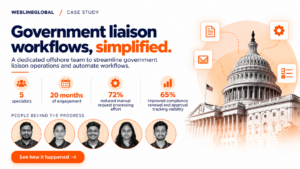
Government Liaison Operations Digitization with Dedicated Offshore Team