Table of Contents

Product leaders across Illinois, from the bustling tech corridor in Chicago to the emerging hubs in Champaign, face a recurring paradox. To capture market share, you must move fast, but moving fast often results in architectural shortcuts that accumulate as technical debt. For a CTO or VP of Engineering, this debt is not just a theoretical concern. It manifests as slower release cycles, frequent regressions, and a frustrated engineering team. When your infrastructure begins to buckle under the weight of new users, the urgency to scale often conflicts with the need to refactor.
Managing this tension requires more than just a mandate to write better code. It demands a strategic approach to talent acquisition and resource allocation. Many organizations in the region find that their internal teams are too buried in daily feature requests to address the underlying rot in their systems. This is where the decision to hire it consultants Illinois becomes a strategic lever, allowing leaders to inject senior level expertise into their projects without the long-term overhead of local full-time executive hires. By bringing in external perspectives, you can objectively assess where the debt is most toxic and create a roadmap for scaling safely.
The True Cost of Technical Debt for Illinois Product Teams
In the competitive Illinois market, technical debt is a silent killer of innovation. When a codebase is riddled with legacy issues, every new feature becomes twice as expensive and takes three times as long to deliver. This creates a vicious cycle where developers spend more time fixing old bugs than building new value. For founders and product leaders, this directly impacts the bottom line and the ability to respond to market shifts. If your competitors can deploy updates weekly while your team struggles with a monthly cadence, you are losing the race.
Understanding the Friction in Scaling Safely
Scaling safely means ensuring that your application can handle ten times the traffic without a complete rewrite or a catastrophic outage. However, most startups and mid-market companies in Illinois scale by “bolting on” features rather than integrating them. This fragmentation leads to a fragile backend. To reduce technical debt, engineering leaders must recognize that scaling is as much about removal as it is about addition. It is about removing bottlenecks, deprecated libraries, and inefficient data structures that no longer serve the current scale of the business.
Identifying High-Interest Debt
Not all debt is created equal. Some shortcuts are strategic and acceptable for an MVP. High-interest debt, however, is code that exists in the most frequently modified parts of your system. If your core checkout logic or user authentication flow is a “black box” that everyone is afraid to touch, you have a high-interest debt problem. When you hire IT consultants to perform an audit, they focus on these critical paths first. The goal is to identify which sections of the code are preventing you from scaling and prioritize them for refactoring.
The Local Talent Constraint
One of the biggest hurdles in Illinois is the cost and availability of local talent. Hiring a senior architect in Chicago to focus exclusively on refactoring is an expensive proposition. Many firms realize that they need specialized skills but cannot justify the local salary benchmarks for what might be a six-month intensive project. This leads many to look for flexible staffing models that provide the same level of seniority at a more sustainable price point.
Struggling With Technical Debt While Scaling?
Illinois product teams often lose speed because legacy systems slow development. Get expert guidance on how to refactor safely and scale your platform without disrupting releases.
Strategic Intervention: Why Hire IT Consultants Illinois?
When internal teams are stretched thin, the objective view of a consultant is invaluable. Internal developers are often too close to the code to see the structural flaws, or they may have emotional attachments to the systems they built. External consultants bring a “been there, seen that” perspective from working across multiple industries and tech stacks. They can help you reduce technical debt Illinois by implementing industry standard patterns that your current team might not be familiar with, such as moving from a monolithic architecture to microservices or optimizing a legacy database.
Bridging the Gap Between Speed and Stability
The primary reason to hire it consultants Illinois is to maintain velocity while fixing the foundation. A common mistake is to halt all feature development for a “grand refactor,” which often fails and frustrates the business side. A consultant helps you implement a “strangler pattern” or incremental refactoring strategy. This allows the product team to continue delivering value while the external experts work on decoupling the legacy components. This dual-track approach is the only way to ensure you are scaling safely without losing momentum in the market.
Expertise in Modern Tech Stacks
Many legacy systems in Illinois-based enterprises are built on aging versions of .NET, Java, or PHP. Migrating these to modern frameworks like React, Node.js, or cloud-native AWS environments requires a specific set of skills that your legacy maintainers might lack. By bringing in dedicated consultants, you gain access to specialists who understand the nuances of these migrations. They don’t just write code; they establish the DevOps pipelines and automated testing frameworks that prevent debt from accumulating in the future.
Evaluating Consultant Quality
When choosing a partner, look beyond their technical resume. A good consultant for a scaling firm should understand business logic. They should be able to explain the ROI of a specific refactoring task in terms of reduced server costs or faster deployment times. At WeblineGlobal, we emphasize this consultative approach, ensuring that our offshore developers in India act as true extensions of your Illinois team, managed with the transparency and accountability that US-based leadership provides.
Strengthening the Core: The Role of Backend Engineering
Technical debt is most dangerous when it lives in the backend. While frontend issues are visible and often easier to fix, backend debt is hidden in slow queries, unoptimized APIs, and poor data modeling. As you scale, these issues become amplified. A backend that worked for 1,000 users will often collapse at 100,000. This is why many product leaders prioritize the decision to hire backend developers who have experience with high-concurrency systems and distributed architectures.
Optimizing Data Layers and API Performance
Scaling safely requires a resilient backend. This often involves moving away from synchronous processes to asynchronous, event-driven architectures. If your Illinois engineering team is currently struggling with database deadlocks or API timeouts, it is a clear sign of technical debt. Refactoring these core components is not a task for junior developers. It requires a deep understanding of system design. When you review refactoring plan documents, you should look for clear strategies on how data integrity will be maintained during the transition.
The Impact of Cloud Infrastructure on Debt
Sometimes, technical debt is actually “cloud debt.” Misconfigured AWS or Azure environments can lead to massive monthly bills and performance bottlenecks. Scaling safely means optimizing your infrastructure as code. Consultants can help you implement containerization with Docker and Kubernetes, ensuring that your application is portable and scalable. This infrastructure-level refactoring is often the fastest way to reduce technical debt Illinois and see an immediate improvement in system stability.
Ensuring Seamless Integration
When you add external backend developers to your pod, integration is key. They must follow your coding standards, participate in your stand-ups, and use your CI/CD pipelines. The goal is not to have a separate “refactoring team” that works in a vacuum, but to have a dedicated resource that works alongside your local Illinois team to strengthen the core product. This collaborative model is what we champion at WeblineGlobal, providing the scale of India with the delivery assurance required by US businesses.
Get Pre-Vetted Developers to Fix Technical Debt Faster
Need senior engineers who can modernize your backend, optimize cloud infrastructure, and refactor legacy code without slowing your roadmap?
Access experienced developers and architects ready to support your Illinois product team.
Navigating the Decision: Local vs. Offshore Talent
Illinois product leaders often struggle with the choice between hiring locally in Chicago or looking offshore. The local market is expensive and competitive, with tech giants and well-funded startups bidding up the price of talent. Looking offshore, specifically to India, offers a way to significantly reduce costs while maintaining high quality, provided you have the right model in place. The key to scaling safely with an offshore team is ensuring that there is no compromise on communication or technical vetting.
The RelyShore Model: The Best of Both Worlds
At WeblineGlobal, we solve the offshore risk through our RelyShore model. While the developers are based in India, providing a 40 to 60 percent cost advantage, the delivery is backed by US-based assurance. This means you get the scale you need to reduce technical debt Illinois without the management headaches typically associated with traditional outsourcing. You get direct access to your developers, but you also have a US-based partner who understands the local business context and legal requirements.
Vetting for Technical and Communication Skills
When you hire it consultants Illinois through an offshore partner, the vetting process is everything. It is not enough to check if they can code; you must check if they can problem-solve. Can they look at a messy legacy codebase and identify the patterns? Can they communicate their refactoring plan clearly to your internal stakeholders? We handle this vetting process rigorously, providing you with a shortlist of pre-vetted candidates within 48 hours, so you can start scaling safely without delay.
Maintaining IP and Security
Security is a major concern for Illinois companies, especially those in fintech or healthcare. When hiring remote teams to reduce technical debt, you must ensure that your intellectual property is protected. Working with an established firm like WeblineGlobal, which has been in business since 1999, provides the peace of mind that comes with strict NDAs, access controls, and a proven track record of delivering over 3500 projects for global clients like LG and Siemens.
Executing the Refactor: A Roadmap for CTOs
Once you have decided to hire it consultants Illinois, the next step is execution. You cannot fix everything at once. A successful refactoring initiative requires a clear roadmap that balances technical needs with business goals. Start by identifying the “pain points” in your current sprint cycles. Where are the most bugs being reported? Which features are consistently delayed? This is your starting point for reducing debt.
The Importance of a Detailed Refactoring Plan
Before any code is changed, you must review the refactoring plan details with your consultants. This plan should outline the specific areas of the code to be addressed, the expected impact on performance, and the testing strategy to ensure no regressions are introduced. A good plan also includes a rollback strategy. Scaling safely means always having a way back if a change doesn’t go as expected. This level of rigor is what separates professional consultants from simple “code-monkeys.”
Setting Benchmarks for Success
How do you know if your efforts to reduce technical debt Illinois are working? You need metrics. Look for a decrease in “cycle time” (the time it takes from starting a task to deploying it). Monitor your “defect density” and system uptime. If your consultants are effective, you should see these numbers improve within a few months. Most importantly, your internal team’s morale should improve as they spend less time fighting fires and more time building innovative features.
Continuous Improvement Culture
Refactoring is not a one-time event; it is a mindset. To prevent debt from accumulating again, your team must adopt practices like continuous integration, automated testing, and regular peer reviews. Your external consultants should not just fix the code; they should mentor your local team on these best practices. This ensures that the benefits of your investment last long after the initial project is complete.
Scaling Safely for Long-Term Success
The tech landscape in Illinois is evolving rapidly. Whether you are a Chicago-based SaaS company or an enterprise in Peoria, your ability to scale is tied to the health of your codebase. Ignoring technical debt is a short-term strategy that leads to long-term failure. By choosing to hire it consultants Illinois and leveraging the global talent pool, you can address these issues head-on without breaking the bank.
At WeblineGlobal, we understand the unique pressures facing Illinois product teams. We provide the senior expertise and scalable developer pods needed to reduce technical debt and ensure you are scaling safely. Contact us to get the best benefits of our proven RelyShore model, which is the cost benefits of India-based talent with the reliability and communication of a US-based partner. Don’t let legacy code hold your business back. Take the first step toward a cleaner, more scalable future today.
Social Hashtags
#TechnicalDebt #ITConsulting #IllinoisTech #SoftwareArchitecture #ProductEngineering #BackendEngineering #TechLeadership #DevOps #ScalingStartups #CloudEngineering #Microservices #SoftwareRefactoring #EngineeringManagement #TechConsulting #StartupScaling
Ready to Reduce Technical Debt and Scale Faster?
Stop letting legacy systems slow your growth. Hire experienced remote developers and consultants who can help your team refactor, optimize, and scale your platform with confidence.
Start building a stronger engineering foundation today.
Frequently Asked Questions
Common signs include significantly slowed development velocity, a high rate of bugs in new releases, difficulty onboarding new developers due to code complexity, and an inability to scale the system to meet increasing user demand without frequent crashes.
Offshore developers provide a cost-effective way to dedicate senior resources to refactoring tasks that your local team may not have time for. By following a structured model like RelyShore, they act as an extension of your team, implementing best practices and modernizing your stack while your local team focuses on core business logic.
The main risk is introducing regressions that break existing functionality. This is mitigated by having a robust automated testing suite, a clear refactoring plan, and experienced consultants who use incremental patterns like the "strangler pattern" to modernize the system without a high-risk "big bang" rewrite.
While big structural changes take time, you can often see "quick wins" in system performance or deployment speed within the first 4 to 8 weeks. A full debt reduction and scaling initiative typically spans 3 to 9 months, depending on the size and age of the codebase.
The backend is the engine of your application. While the frontend handles the user experience, the backend manages data, security, and integration. Most scaling bottlenecks occur at the data or API layer, requiring specialized backend developers to optimize queries and implement distributed architectures.



Success Stories That Inspire
See how our team takes complex business challenges and turns them into powerful, scalable digital solutions. From custom software and web applications to automation, integrations, and cloud-ready systems, each project reflects our commitment to innovation, performance, and long-term value.
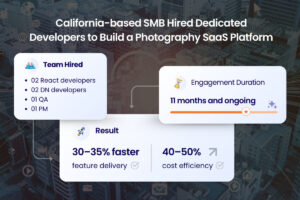
California-based SMB Hired Dedicated Developers to Build a Photography SaaS Platform
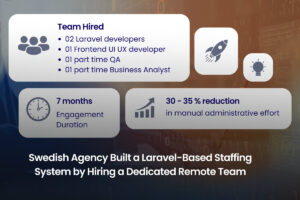
Swedish Agency Built a Laravel-Based Staffing System by Hiring a Dedicated Remote Team