Table of Contents

Chicago has rapidly transformed into a global hub for data-intensive industries, ranging from high-frequency trading and logistics to healthcare analytics. For CTOs and engineering leaders in the Windy City, the challenge is no longer just about collecting data; it is about building resilient, scalable data products that can turn raw information into actionable business intelligence. Python has emerged as the undisputed backbone of this movement, offering the versatility required to handle complex data engineering, machine learning, and API development within a single ecosystem.
However, the local talent market presents a significant hurdle for growing firms. As enterprise demand surges, the competition to hire Python developers in Chicago has reached an all-time high, often leading to inflated salaries and prolonged hiring cycles. To maintain a competitive edge, leaders must look beyond traditional local recruitment and adopt a more strategic approach to team composition. This involves balancing local leadership with high-performing remote pods that can support data-heavy pipelines without the overhead of a full in-house team in the Loop or River North.
The Complexity of Managing Data Product Teams Chicago
Building a data product is fundamentally different from standard software development. It requires a deep understanding of data lineage, latency, and the iterative nature of model deployment. When managing data product teams Chicago, leaders often find that the biggest bottleneck is not the code itself, but the coordination between data scientists, data engineers, and product owners. A cohesive team must be able to translate business requirements into high-performance Python code that remains maintainable as the data volume grows.
Defining the Role of the Python Lead in Data Products
The lead developer in a data-centric environment does more than write scripts. They architect the flow of information. They must ensure that every piece of logic added to the pipeline is optimized for performance. In Chicago, where many firms deal with massive datasets in the financial or supply chain sectors, a lead who understands the nuances of Python scalability is essential. This person acts as the bridge between the high-level product vision and the technical execution, ensuring that the team avoids common pitfalls like tight coupling and unoptimized database queries.
The Shift from Local to Hybrid Engineering Pods
Many Chicago-based companies are moving away from purely local teams toward hybrid models. By choosing to hire Python developers through a dedicated pod model, organizations can scale their engineering capacity almost overnight. This approach allows local leaders to focus on strategy and stakeholder management while the remote developers handle the heavy lifting of feature development and pipeline maintenance. It reduces the risk of project delays caused by the local talent shortage while maintaining high standards of delivery through a structured vendor partnership.
If you are looking to scale your engineering capacity quickly with pre-vetted talent, you can Request Developer Profiles to see how our Python specialists can integrate into your existing workflows.
Addressing the Hurdles to Hire Python Developers Chicago
The recruitment landscape in Chicago is unique. With several Fortune 500 companies and a thriving startup scene all vying for the same pool of talent, the time-to-hire can often stretch into months. This delay can be catastrophic for a data product that needs to hit the market before a competitor. Furthermore, the cost of a senior-level Python engineer in Chicago can be 40 to 60 percent higher than a remote equivalent of the same technical caliber, especially when factoring in benefits and office space.
Evaluating Technical Depth Beyond the Resume
When you look to hire Python developers Chicago, the evaluation process must be rigorous. A developer might be proficient in basic Python syntax but lack the experience required to handle data product teams Chicago requirements. You need engineers who understand how to work with distributed systems, handle large-scale data ingestion, and implement robust error handling. Asking candidates about their experience with asynchronous programming or their approach to memory management in Python can quickly separate the generalists from the specialists.
The Importance of Domain-Specific Knowledge
Data products in different industries have different requirements. For instance, a logistics product requires real-time geographic data processing, while a financial tool might prioritize ACID compliance and audit trails. When you hire data analytics experts, it is vital to ensure they have worked within your specific industry context. This domain knowledge reduces the onboarding time and ensures that the developers understand the “why” behind the technical requirements, leading to better decision-making during the development lifecycle.
Testing for Library Proficiency
A true Python expert should be well-versed in the ecosystem of libraries that power modern data products. This includes everything from Pandas and NumPy for data manipulation to FastAPI for high-performance API layers. Testing for this proficiency should involve practical exercises rather than theoretical questions, ensuring the candidate can actually support data-heavy pipelines in a production environment.
To ensure your project remains on track, it is often beneficial to Hire Remote Developers who bring specialized experience in data engineering and Python development to your Chicago-based team.
Achieving Python Scalability in Growing Data Environments
Scalability is often an afterthought in the early stages of product development, but for data products, it must be a core architectural principle. Python is an incredibly powerful language, but it can become a bottleneck if not managed correctly. As your data volume increases from gigabytes to terabytes, your Python scalability strategy will determine whether your product remains responsive or grinds to a halt. This is where experienced engineering pods provide the most value, bringing proven patterns for horizontal scaling and efficient resource management.
Overcoming the Global Interpreter Lock (GIL)
One of the most common challenges in Python development is the Global Interpreter Lock, which can limit the performance of multi-threaded applications. To achieve true Python scalability, teams often need to utilize multi-processing or asynchronous programming models. Developers who have experience with libraries like Trio or asyncio can help architect systems that handle thousands of concurrent connections or data streams without requiring massive increases in server costs. This is a critical consideration when you hire Python developers Chicago for high-traffic data products.
Building Resilient Data Pipelines
A data product is only as good as the pipeline that feeds it. Resilience means that the system can handle intermittent failures, data format changes, and spikes in traffic without manual intervention. Experienced teams will often review Python teams and their current architectures to identify single points of failure. Implementing tools like Apache Airflow or Prefect within a Python-based stack allows for better orchestration and observability, ensuring that data flows smoothly from ingestion to the end-user interface.
Implementing Horizontal Scaling Strategies
When your Python application reaches its limit on a single server, horizontal scaling becomes necessary. This involves containerizing the application using Docker and orchestrating it with Kubernetes. By distributing the workload across multiple nodes, you can maintain performance even as your user base grows. This is a standard requirement for modern data product teams Chicago, and your hiring criteria should reflect the need for cloud-native development experience.
If you are concerned about the current performance of your stack, you can schedule a consultation to discuss your scalability challenges and explore how a dedicated Python pod can optimize your infrastructure.
Vendor Selection Criteria for Python Staff Augmentation
For many Chicago firms, the fastest way to scale is through a trusted staff augmentation partner. However, not all vendors are created equal. When evaluating a partner to help you hire Python developers Chicago, you must look beyond the hourly rate. You need a partner that understands the RelyShore model, providing the cost benefits of offshore talent with the delivery assurance and communication standards required by US-based leadership. WeblineGlobal has spent over two decades refining this balance, ensuring that our clients retain full control over their projects while benefiting from our technical scale.
Transparency in Technical Vetting
A reputable vendor should be transparent about their vetting process. You should not just receive a list of names; you should receive detailed profiles that highlight specific project experience and technical competencies. When we provide developers to support data-heavy pipelines, we ensure they have been tested on their ability to write clean, maintainable Python code and their familiarity with modern data engineering practices. This level of transparency reduces the risk of a bad hire and ensures that the developers can hit the ground running.
Communication and Cultural Alignment
One of the biggest risks in remote hiring is a breakdown in communication. This is especially true for complex data product teams Chicago where requirements can change quickly. A good vendor will provide developers who are not only technically proficient but also have the communication skills needed to participate in daily stand-ups, contribute to architectural discussions, and document their work clearly. Cultural alignment ensures that the remote team feels like an extension of your local office rather than a separate entity, fostering a sense of shared ownership over the product’s success.
Ready to see the difference that high-quality talent can make? You can Schedule Developer Interviews today to find the perfect fit for your next data-driven project.
ROI Justification for Remote Python Engineering Pods
Investing in remote engineering is a strategic business decision that should be backed by clear ROI metrics. Beyond the immediate savings on base salaries, there are several hidden benefits to using remote pods. These include reduced overhead for office space, lower costs for hardware and software licenses, and the ability to scale the team up or down based on project requirements. For a Chicago-based firm, this flexibility is invaluable, allowing them to remain agile in a fluctuating market.
Speed to Market as a Competitive Advantage
In the world of data products, being first to market can define the success of a project. By choosing to review python teams and supplement them with remote talent, you can significantly accelerate your development timelines. Instead of waiting months to hire Python developers Chicago locally, you can have a full team of pre-vetted specialists working on your product within days. This speed translates directly into faster revenue generation and a stronger market position.
Long-Term Maintenance and Technical Debt
A common mistake is focusing only on initial development costs. The long-term cost of maintaining a poorly written Python application can be astronomical. By hiring experienced developers through a structured pod model, you ensure that the code is built correctly from day one. This focus on quality reduces technical debt and makes the application easier to scale and update in the future. Investing in the right talent now saves significant time and money over the entire lifecycle of the product.
To ensure your project is built on a solid foundation, you can Hire Remote Developers who specialize in writing clean, scalable Python code tailored for data-heavy applications.
Strategic Management of Python Data Projects
Successful management of a data project requires more than just technical oversight. It requires a commitment to iterative development and a focus on the end-user experience. Leaders must ensure that the team is not just building features, but is solving real business problems. This involves regular check-ins with stakeholders and a data-driven approach to tracking project progress. When data product teams Chicago are managed effectively, they become a powerful engine for innovation within the organization.
Integrating Quality Assurance into the Pipeline
Quality assurance should never be an afterthought in data engineering. Automated testing for Python applications is essential to ensure that data transformations are accurate and that the code remains stable as new features are added. This includes unit tests for individual functions and integration tests for the entire data pipeline. When you hire Python developers Chicago, ensure they have a strong testing mindset and are comfortable working within a CI/CD environment.
Security and Data Privacy Considerations
As data products often handle sensitive information, security must be a top priority. This is particularly relevant in Chicago’s healthcare and financial sectors. Teams must implement robust access controls, data encryption, and regular security audits. A professional vendor will ensure that all developers follow best practices for secure coding and comply with relevant data protection regulations. This commitment to security protects your intellectual property and builds trust with your customers.
Wrap Up
Building a successful data product in a competitive market requires a balance of local strategy and global execution. By leveraging the expertise of specialized Python developers, Chicago firms can overcome the local talent gap and build scalable, high-performance systems that drive business growth. Whether you are looking to augment your current team or build a new pod from scratch, the right partnership can make all the difference in your product’s success.
Social Hashtags
#PythonDevelopers #ChicagoTech #DataEngineering #DataProducts #SaaSDevelopment #HireDevelopers #RemoteTeams #TechHiring #DevOps #MachineLearning #BigData #CloudComputing #SoftwareDevelopment #StartupGrowth #EngineeringLeadership
If you are ready to explore how a dedicated Python team can help you achieve your goals, Schedule a Consultation with our experts today to discuss your specific project needs.
Frequently Asked Questions
We typically provide a shortlist of pre-vetted candidate profiles within 48 hours. Once you have interviewed and selected your developers, they can often begin working on your project within a week, significantly faster than traditional local recruitment methods.
Most Chicago-based companies see a reduction in engineering costs of between 40 and 60 percent compared to hiring locally. These savings include not only base salary but also the elimination of recruitment fees, benefits, and office-related overhead.
Our developers undergo a multi-stage vetting process that includes technical assessments, communication evaluations, and previous project reviews. We focus on hiring developers with deep experience in Python scalability and data engineering to ensure they can meet the high standards of our clients.
Yes, our developers are accustomed to working with US-based clients and can align their schedules to ensure sufficient overlap for daily meetings and real-time collaboration. This ensures seamless integration into your data product teams Chicago.
Absolutely. All intellectual property and code developed by our teams belongs entirely to the client. We sign comprehensive NDAs and IP protection agreements to ensure your proprietary information remains secure at all times.


Success Stories That Inspire
See how our team takes complex business challenges and turns them into powerful, scalable digital solutions. From custom software and web applications to automation, integrations, and cloud-ready systems, each project reflects our commitment to innovation, performance, and long-term value.
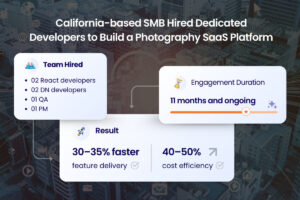
California-based SMB Hired Dedicated Developers to Build a Photography SaaS Platform
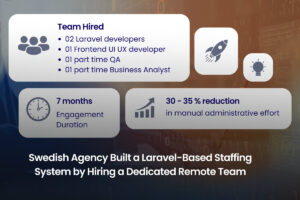
Swedish Agency Built a Laravel-Based Staffing System by Hiring a Dedicated Remote Team