Table of Contents

Texas has established itself as a global powerhouse for enterprise operations, housing some of the largest players in energy, healthcare, and finance. At the heart of these organizations often sits a complex web of .NET systems, many of which have been the backbone of the business for over a decade. However, as the digital landscape shifts toward cloud-native architectures and real-time data processing, the operational gaps within these legacy environments are becoming increasingly visible. CTOs and VPs of Engineering are now finding that the very systems that once provided stability are now the primary bottlenecks preventing rapid market responsiveness.
The challenge is not just technical but deeply rooted in talent acquisition and strategic resource allocation. As local competition for engineering talent in hubs like Austin and Dallas reaches a fever pitch, leadership teams must decide between struggling with local hiring or looking toward more scalable, efficient delivery models. This guide breaks down the specific operational gaps seen in .NET systems across the state and provides a roadmap for decision-makers looking to hire .NET developers who can modernize, maintain, and scale these critical enterprise assets.
Understanding the Operational Landscape of .NET in Texas
The enterprise ops landscape in Texas is unique due to its heavy reliance on high-uptime, mission-critical systems. Many organizations initially built their infrastructure on .NET Framework, which served its purpose during the era of on-premises servers and monolithic deployments. Today, these organizations face a crossroads where they must bridge the gap between their reliable legacy foundations and the modern requirements of the digital economy.
The Reality of Legacy .NET Systems Texas
In many Texas enterprises, legacy .net systems Texas have become a liability rather than an asset. These systems often suffer from aging codebases that lack documentation, making every update a high-risk event. When a system is built on an outdated version of the framework, it creates a cascade of operational issues, from security vulnerabilities to the inability to integrate with modern SaaS platforms. Decision-makers often find that their internal teams are spending 80 percent of their time on maintenance rather than innovation.
Security and Compliance Risks
For industries like healthcare and finance, security is not optional. Legacy systems often lack support for modern authentication protocols and encryption standards. This creates a significant gap in the organization’s security posture, making it vulnerable to breaches that could lead to devastating regulatory fines and loss of client trust. Addressing these gaps requires specialized expertise in both the old and new worlds of .NET development.
Assessing Vulnerabilities
Enterprises must conduct regular audits to identify where their .NET systems fall short of current compliance standards. If your current team lacks the bandwidth to perform these audits while maintaining daily operations, it is a clear sign that you need to address legacy system gaps through external support.
When the pressure to modernize becomes unsustainable for your in-house staff, the most efficient path forward is to Hire Remote .NET Developers who specialize in enterprise-grade .NET transformations.
The Hidden Costs of Technical Debt in Enterprise Ops
Technical debt is often viewed as a purely technical problem, but for a CTO or Founder, it is a financial and operational one. In the context of enterprise ops, technical debt manifests as slower release cycles, increased server costs, and a high frequency of system outages. These inefficiencies directly impact the bottom line and the organization’s ability to compete on a global scale.
Performance Bottlenecks and Scalability
Enterprises in Texas often face seasonal or market-driven spikes in demand. A legacy .NET system that was not designed for the cloud will struggle to scale horizontally. This results in performance degradation during peak times, leading to poor user experiences and lost revenue. Modernizing these systems to .NET 8 or 9 allows for microservices architectures that can handle massive scale with significantly lower infrastructure costs.
Impact on Delivery Speed
When the codebase is cluttered with technical debt, even simple feature requests can take weeks or months to implement. This lack of agility is a major operational gap. To close this gap, engineering leaders must look for partners who understand the nuances of refactoring legacy code without disrupting existing business processes. It is often more cost-effective to hire enterprise developers who have specific experience in large-scale migrations than to retrain a team that is already underwater with maintenance.
Identifying Efficiency Gaps
If your deployment pipeline takes more than a few hours or requires manual intervention at every step, your operational efficiency is compromised. This is a common pain point that can be solved by integrating DevOps specialists into your .NET pods to automate testing and deployment workflows.
Ready to streamline your engineering operations and eliminate technical debt? You can schedule a consultation with our experts to evaluate your current system health and talent needs.
The Local Hiring Paradox: Why Texas Firms Struggle
Texas has a thriving tech scene, but the demand for senior-level .NET expertise far outstrips the supply. This creates a hiring paradox where firms spend months and tens of thousands of dollars trying to find a local candidate, only to lose them to a higher bidder or a remote-first Silicon Valley firm within a year. This turnover creates massive operational instability and knowledge loss.
Cost vs. Value in the Texas Talent Market
The cost of living in Texas cities has risen significantly, and with it, the salary expectations for developers. When you add the costs of benefits, office space, and recruitment fees, the price of a single local senior developer can exceed $180,000 per year. For many enterprises, this makes it difficult to scale a full team of 5 to 10 developers without ballooning the budget. This is where the decision to hire .NET developers from India becomes a strategic financial move.
The Risks of Long Hiring Cycles
Every month a position remains unfilled, your project timelines slip. In the enterprise world, a three-month delay can mean missing a market window entirely. By looking beyond the local market, firms can often find pre-vetted talent and have them onboarded in as little as 48 hours. This speed to market is a critical competitive advantage that local-only hiring simply cannot match.
Retention and Continuity
One of the biggest risks of local hiring is the “poaching” culture prevalent in tech hubs. When you work with a dedicated team model from an established vendor like WeblineGlobal, you gain the benefit of higher retention rates and better knowledge continuity, as the vendor manages the career growth and satisfaction of the developers for you.
If your project timeline is at risk due to local hiring delays, the best move is to Request Developer Profiles from our pre-vetted talent pool to get your initiative back on track.
Bridging the Gaps: Strategies for Success
Closing the operational gaps in your .NET ecosystem requires a multi-pronged approach. It is not just about writing better code; it is about building a sustainable delivery engine. This involves choosing the right engagement model, ensuring cultural and technical alignment, and maintaining a focus on long-term ROI.
Moving Toward a Dedicated Pod Model
Traditional staff augmentation can sometimes feel disjointed. For Texas enterprises, the dedicated “pod” model is often more effective. A pod is a self-contained team of developers, QA testers, and a project lead who integrate directly into your workflow. This model ensures that the team understands your business goals and the specific nuances of your legacy .net systems Texas, leading to better decision-making and higher quality output.
The RelyShore℠ Delivery Advantage
At WeblineGlobal, we utilize the RelyShore℠ model to provide the best of both worlds: the cost-efficiency of India-based talent with the reliability and communication standards expected by US-based enterprises. This model addresses common concerns regarding time zones and delivery risk by providing a structured framework for transparency, IP protection, and quality assurance. This allows you to hire enterprise developers with the confidence that they will deliver according to your standards.
Vetting for Communication and Culture
Technical skill is only half the battle. When you hire .NET developers Texas enterprises need individuals who can communicate complex ideas clearly and collaborate across time zones. Our vetting process includes rigorous testing of both technical depth and soft skills to ensure a seamless fit with your internal team.
To see how a dedicated pod can transform your development cycle, schedule developer interviews with our senior .NET specialists today.
Evaluating Your Vendor: Beyond the Resume
When deciding who to partner with to address legacy system gaps, decision-makers must look beyond simple resumes. The right vendor should act as a consultant, helping you navigate the trade-offs between speed, cost, and quality. They should have a proven track record of working with large-scale enterprises and a deep understanding of the .NET ecosystem.
Key Criteria for CTOs and VPs
Start by evaluating the vendor’s longevity and project history. A company that has been in the business since 1999 and has delivered over 3500 projects brings a level of stability that a newer agency cannot match. Furthermore, look for experience with global brands such as Siemens or LG, as this indicates an ability to meet the high standards of enterprise ops. You need a partner who understands that you are not just hiring a coder, but a part of your business’s future.
Infrastructure and IP Security
When working with remote teams, security is paramount. Ensure your vendor has strict NDAs, IP protection protocols, and secure access controls in place. This is especially critical when dealing with sensitive data common in the Texas energy or healthcare sectors. Transparency in pricing and month-to-month flexibility are also key indicators of a vendor that is confident in its ability to provide value over the long term.
Technical Stack Depth
The .NET world is broad. Your partner should have expertise not just in C#, but in the surrounding ecosystem, including Azure, SQL Server, and modern frontend frameworks like React or Angular. This ensures they can provide a holistic solution to your enterprise challenges.
Don’t leave your system modernization to chance. Hire developers who have the enterprise experience and technical depth to move your business forward.
Decision-Making Roadmap for Texas Enterprise Leaders
As you evaluate your next steps, consider the following questions to guide your decision-making process. First, what is the true cost of inaction? If your legacy .net systems Texas are preventing you from launching new products or are causing frequent downtime, the cost of doing nothing is likely higher than the cost of modernization. Second, do you have the internal bandwidth to manage a complex migration, or do you need a partner who can take ownership of the process?
By choosing to hire .NET developers through a strategic remote model, you can bridge the operational gaps that currently hinder your growth. This approach allows you to access a global talent pool, reduce your overhead costs by 40 to 60 percent, and accelerate your development timelines. The key is to start with a clear assessment of your needs and a partner who can provide the right mix of technical skill and business acumen.
The goal is not just to maintain your current systems, but to build a resilient, scalable infrastructure that will support your organization for the next decade. Whether you need to augment your existing team or hire a full dedicated pod, the right talent is available to help you achieve your goals. Take the first step toward a more efficient future today by reaching out to a partner who understands the unique challenges of enterprise ops in Texas.
Ready to bridge your operational gaps? Schedule a Consultation with WeblineGlobal today to discuss your .NET modernization strategy.
Frequently Asked Questions
Our teams are accustomed to working with US-based enterprises and often provide a significant overlap with your business hours. Through the RelyShore℠ model, we establish clear communication protocols and use modern collaboration tools to ensure that distance never becomes a barrier to productivity or transparency.
While local hiring can take months, we typically provide a shortlist of pre-vetted developer profiles within about 48 hours. This allows you to start interviewing almost immediately and have your new team members integrated into your project within a week or two.
Yes, our developers have extensive experience in modernizing legacy systems. We understand the complexities involved in migrating monolithic architectures to microservices and can help you plan and execute a transition that minimizes downtime and data risk.
We take IP protection very seriously. All our engagements include legally binding NDAs and strict access controls. As a company with a long-standing US presence and an established delivery center in India, we adhere to international standards for data security and professional ethics.
We offer month-to-month hiring flexibility because we believe in earning your business through performance. This allows you to scale your team up or down based on your project requirements and budget, providing a level of agility that is impossible with traditional local hiring.




Success Stories That Inspire
See how our team takes complex business challenges and turns them into powerful, scalable digital solutions. From custom software and web applications to automation, integrations, and cloud-ready systems, each project reflects our commitment to innovation, performance, and long-term value.
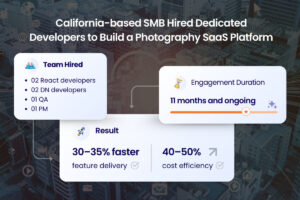
California-based SMB Hired Dedicated Developers to Build a Photography SaaS Platform
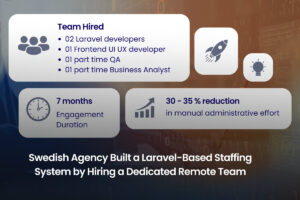
Swedish Agency Built a Laravel-Based Staffing System by Hiring a Dedicated Remote Team