Table of Contents

Enterprises across Ohio, from the financial hubs in Columbus to the manufacturing powerhouses in Cleveland and Cincinnati, are grappling with a silent operational crisis. While the tech world gravitates toward shiny new frameworks and AI-driven automation, the backbone of these organizations remains firmly rooted in legacy Java environments. These systems, often decades old, handle mission-critical data, complex supply chains, and core banking functions. However, the local talent pool is shifting. Finding experienced engineers who are willing to manage monolithic architectures rather than build new microservices is becoming increasingly difficult and expensive.
The decision to maintain legacy Java systems in Ohio is no longer just a technical necessity; it is a strategic business pivot. CTOs and VPs of Engineering are realizing that keeping these systems performant requires a dedicated focus that local hiring often fails to provide at scale. This article serves as a briefing for leadership teams evaluating how to bridge the gap between their aging Java infrastructure and the need for modern delivery speeds. We will examine the trade-offs of local hiring versus remote augmentation and how a structured support model can mitigate the risks associated with technical debt and knowledge silos.
The Challenges of Supporting Legacy Java Systems Ohio
Maintaining a legacy environment in a competitive market like Ohio presents a specific set of hurdles. Most local developers are looking for roles that allow them to work with the latest tech stacks, which means turnover rates for legacy maintenance roles are high. When a senior developer who understands your custom Spring 2.5 implementation leaves, they take years of institutional knowledge with them. This creates a vulnerability in your delivery pipeline that can lead to system outages or security gaps.
The Local Talent Scarcity and Rising Costs
When companies attempt to hire Java developers Ohio, they often find themselves in a bidding war with tech giants and well-funded startups. For an enterprise looking to simply keep the lights on and perform incremental updates, paying top-tier local salaries is often not sustainable. The cost of a full-time, on-site engineer in cities like Columbus or Cincinnati includes not just salary, but benefits, office space, and the overhead of retention programs. For many, the math simply does not add up when the goal is stability over innovation.
Technical Debt and the Knowledge Gap
Legacy systems are rarely well-documented. They often consist of “spaghetti code” and layers of patches applied by different teams over twenty years. A local hire might spend six months just learning the nuances of the codebase before they become productive. By contrast, specialized remote teams that focus on remote maintenance and enterprise support are often better equipped to handle the discovery phase. They bring established methodologies for reverse-engineering and documenting undocumented systems, which reduces the risk of single-point-of-failure dependencies on specific individuals.
If you are struggling to find the right balance between cost and expertise, it may be time to hire Java developers who specialize in long-term maintenance rather than just greenfield development. This approach allows your internal team to focus on high-value digital transformation while the remote pod handles the heavy lifting of legacy support.
Struggling to maintain legacy Java systems while facing talent shortages in Ohio? Get expert guidance on building a reliable remote support model tailored to your enterprise.
Evaluating the Remote Maintenance Model for Enterprise Stability
Moving legacy support to a remote team is not a decision to be taken lightly. It requires a shift in how work is assigned, tracked, and validated. Ohio enterprises have found success by moving away from simple “body shopping” toward a dedicated pod model. In this setup, the remote team functions as an extension of the local engineering department, participating in stand-ups and following the same CI/CD protocols, even if the underlying system is an old Java EE application running on a legacy server.
The RelyShore Delivery Advantage
One of the primary concerns for Ohio-based leaders is the perceived risk of offshore delivery. This is where models like WeblineGlobal’s RelyShore approach change the equation. By combining the cost benefits of developers in India with US-based accountability and project management, enterprises get the best of both worlds. You gain access to a massive pool of talent capable of handling legacy Java systems Ohio without the communication barriers or quality lapses associated with traditional outsourcing. This model ensures that IP protection and security protocols meet US enterprise standards.
Comparing Dedicated Pods vs. Ad-hoc Staffing
When you decide to hire Java developers Ohio through a remote model, you must choose between individual staff augmentation and dedicated pods. For legacy maintenance, pods are almost always superior. A pod typically includes a lead architect, several developers, and a QA specialist. This structure ensures that if one person leaves, the team retains the knowledge of your specific legacy environment. This continuity is vital for systems that have complex business logic buried deep within the backend.
To ensure your organization is prepared for this shift, you should hire enterprise developers who understand the nuances of large-scale infrastructure. These professionals are accustomed to working within the constraints of strict change management and compliance requirements typical of the Ohio corporate landscape.
Strategic Evaluation: When to Hire Java Developers Ohio
While remote teams offer significant advantages, there are specific scenarios where local presence is still valuable. Decision-makers must evaluate the complexity of the domain knowledge required. If the system requires daily physical interaction with hardware or is highly sensitive on-site data that cannot be accessed via secure VPN, a local hire might be necessary. However, for 90 percent of software-based legacy systems, the geographic location of the developer is secondary to their technical proficiency and the robustness of the communication framework.
Skill Sets Required for Legacy Support
Hiring for legacy systems is different from hiring for a modern cloud-native app. You need developers who are comfortable with older versions of the JDK, such as Java 7 or 8, and who have experience with frameworks like Struts, JSF, or older versions of Spring. These developers must also possess the foresight to plan for eventual modernization. They should be able to identify which components can be wrapped in APIs and which ones need a complete rewrite.
Key Technical Criteria for Evaluation
- Deep understanding of Java Concurrency and Memory Management in older JVMs.
- Experience with legacy build tools like Ant or early versions of Maven.
- Ability to work with monolithic databases and complex SQL stored procedures.
- Proven track record in remote maintenance of enterprise-grade applications.
For many CTOs, the best path forward is a hybrid approach. Keep a small core of local architects and maintain legacy systems by augmenting the team with a remote workforce that handles the day-to-day bug fixes, patches, and minor feature requests. This keeps the internal team motivated and the legacy system stable.
Explore how dedicated remote Java teams can reduce costs, eliminate knowledge gaps, and stabilize your legacy systems—without disrupting your current operations.
Cost and ROI Justification for Remote Java Teams
The financial argument for moving maintenance to a remote team is compelling. When you hire Java developers Ohio, the fully loaded cost can often exceed $150,000 to $180,000 per year for a senior engineer. In contrast, an offshore team can provide the same level of expertise at 40 to 60 percent of that cost. This delta can be reinvested into innovation projects or used to accelerate the modernization of the legacy systems themselves.
Reducing the Cost of Inaction
The true cost of legacy systems is not just the developer’s salary; it is the cost of downtime and the “technical debt tax” paid every time a new feature takes three times longer than it should. By engaging a dedicated remote team for legacy Java systems Ohio, you reduce the backlog of technical debt. A structured maintenance team doesn’t just fix bugs; they refactor code and improve test coverage, which slowly but surely increases the velocity of the entire department.
Scalability and Flexibility
Enterprise needs are rarely static. You may have a surge in maintenance requirements during a migration phase or a seasonal peak in usage. Remote models offer month-to-month flexibility that traditional local hiring cannot match. Scaling a local team up and down is slow and damaging to company culture. Scaling a remote pod allows you to match your engineering spend directly to your current project roadmap. It is a more agile way to review support model requirements without the long-term commitment of permanent headcount.
Security, IP, and Risk Management in Remote Hiring
A common objection to offshore maintenance is security. When dealing with legacy systems that house sensitive customer data, Ohio enterprises must be certain that their IP is protected. This is why vendor selection is the most critical part of the process. You are not just hiring developers; you are hiring a security posture and a delivery process.
Ensuring Compliance and Access Control
Your remote partner should have rigorous access controls in place, including secure VPNs, multi-factor authentication, and isolated development environments. At WeblineGlobal, we emphasize that the client retains full project control and ownership of the source code. Our developers work as integrated members of your team, following your internal security guidelines and compliance standards, whether you are in healthcare, finance, or retail.
The Role of NDAs and US-Based Contracts
To mitigate legal risks, it is essential to work with a partner that has a legal presence in the United States. This provides a layer of protection and a clear jurisdictional framework for contracts and NDAs. When you look to hire Java developers Ohio through a global model, ensure that the contract is enforceable and that the vendor has a proven history of working with highly regulated industries.
The transition to a remote support model is often smoother than most VPs of Engineering expect, provided the right foundations are laid during the onboarding phase. It requires a partner who understands both the technical requirements of Java and the business requirements of a US enterprise. If you are ready to stabilize your infrastructure, it is time to hire Java developers who can deliver consistent results without the local overhead.
Transitioning Your Legacy Portfolio to a Remote Team
The transition phase is where most remote partnerships succeed or fail. It is not enough to simply hand over the keys to the repository. There must be a structured knowledge transfer period where the remote team shadows the existing developers. This ensures that the nuances of the business logic and the peculiarities of the legacy Java systems Ohio are fully understood before the remote team takes full ownership of the maintenance tasks.
Setting Clear KPIs for Maintenance
Success should be measured by more than just tickets closed. For a legacy environment, the KPIs should include system uptime, average time to resolution for critical bugs, and the reduction of the technical debt backlog. By setting these expectations early, you create a culture of accountability within the remote team. This level of transparency is what allows Ohio enterprises to sleep soundly, knowing their core systems are in capable hands.
Strategic Selection for Long-Term Success
Maintaining legacy Java systems is a marathon, not a sprint. The goal is to create a sustainable ecosystem where your aging infrastructure continues to provide value without becoming a bottleneck for growth. By choosing to hire Java developers Ohio through a specialized remote model, you solve the talent shortage, reduce operational costs, and gain the flexibility needed to navigate a rapidly changing market.
If you are currently evaluating your internal capacity to manage your Java portfolio, consider the long-term benefits of an augmented team. The right partner will not only maintain your systems but will also act as a consultant to help you navigate the eventual transition to more modern architectures. To explore how this model can work for your specific environment, you should review support model options with us, who understand the unique needs of the Ohio enterprise sector.
Social Hashtags
#LegacyJava #RemoteTeams #JavaDevelopment #TechLeadership #EnterpriseIT #DigitalTransformation #SoftwareMaintenance #JavaDevelopers #ITOutsourcing #OffshoreDevelopment #CTOInsights #TechStrategy
Ready to stabilize your legacy Java environment and cut operational costs? Get pre-vetted remote developers aligned with your business and compliance needs.
Frequently Asked Questions
Hiring local talent in Ohio for legacy maintenance is increasingly expensive and difficult due to high demand for greenfield developers. Remote teams provide specialized expertise in older Java frameworks at a significantly lower cost, allowing you to scale your maintenance efforts without the overhead of local hiring and retention challenges.
Security is maintained through multi-factor authentication, secure VPN access, and strict adherence to your internal compliance protocols. By working with a vendor that has a US presence, you also benefit from US-enforceable NDAs and IP protection laws, ensuring your data and source code remain secure.
Yes. Specialized remote teams are often more experienced with older Java versions than younger local developers who have primarily worked with Java 11 or higher. These engineers understand the intricacies of legacy EJB, Struts, and older Spring versions, which is critical for remote maintenance.
While the initial shortlist of candidates can be provided within 48 hours, the full onboarding and knowledge transfer phase typically takes two to four weeks. This ensures the remote developers fully understand your specific codebase and business logic before taking over maintenance tasks.
The RelyShore model combines the cost-efficiency of Indian developers with the reliability of US-based management. This model provides Ohio enterprises with a low-risk way to scale their engineering teams while maintaining high standards of communication, quality, and accountability.


Success Stories That Inspire
See how our team takes complex business challenges and turns them into powerful, scalable digital solutions. From custom software and web applications to automation, integrations, and cloud-ready systems, each project reflects our commitment to innovation, performance, and long-term value.
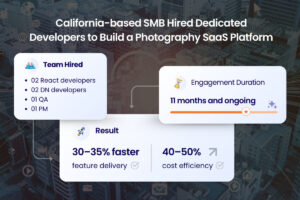
California-based SMB Hired Dedicated Developers to Build a Photography SaaS Platform
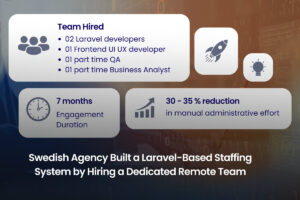
Swedish Agency Built a Laravel-Based Staffing System by Hiring a Dedicated Remote Team