
Table of Contents

How Did We Discover LLM Memory Degradation in a FinTech Advisory Platform?
During a recent project for a FinTech wealth advisory platform, our engineering team was tasked with building an intelligent conversational agent. The goal was to allow users to discuss financial strategies, explore investment concepts and simulate portfolio allocations over extended, multi-turn sessions. Initially, we relied on a stateless LLM architecture, simply passing the conversation history back to the model’s API within its native context window.
While working on the pilot release, a serious issue surfaced. A user stated a critical constraint in the very first prompt: “I do not want any high-risk tech stocks in my portfolio.” The conversation then spanned over 80 turns, exploring macroeconomic trends, bond yields and tax implications. Around turn 85, the user asked for a final portfolio recommendation. The chatbot confidently suggested a heavy allocation in high-risk tech equities, completely ignoring the initial constraint.
We realized that relying purely on a stateless LLM API without an external memory system leads to severe recall degradation in long conversations. Even if the conversation is technically within the model’s maximum token limit, the “needle in a haystack” phenomenon causes the model to lose track of critical facts introduced early on. This challenge inspired this article, detailing how we rigorously evaluated these memory limits and ultimately engineered a robust solution, so other teams can avoid deploying forgetful AI in production.
Why Does Stateless LLM Context Limit Threaten Long-Turn Conversations?
In a typical stateless chatbot implementation, the application maintains the chat history in local state or a database and appends it to every new API call. The business use case for our FinTech client required the AI to act as a persistent advisor. Users expected the AI to remember their risk tolerance, financial goals and specific exclusions throughout the entire lifecycle of a session.
The architectural concern here is the over-reliance on the LLM’s attention mechanism over long sequences. As the prompt grows to tens of thousands of tokens, the model’s ability to attend to the absolute beginning of the prompt diminishes. For enterprise applications where compliance, safety and personalization are non-negotiable, a chatbot that “forgets” constraints is not just a bad user experience—it is a critical system failure.
What Happens When an LLM Forgets Key Facts During a Session?
The symptoms in our staging environment were subtle at first. The chatbot did not crash and the API did not return token limit errors. Instead, the failure manifested as logical inconsistencies and hallucinated personalization.
To diagnose the severity, we built a custom benchmarking script. Our testing method mirrored the exact scenario the original poster of the problem faced:
- Injection: We introduced a specific, verifiable fact at turn 1 (e.g., “The user’s secret code is ALPHA-77”).
- Noise generation: We programmatically simulated 100 to 200 turns of generic financial dialogue (the “haystack”).
- Recall testing: At intervals (turn 50, 100, 150), we asked the model to recall the secret code.
The logs revealed a steep drop-off in recall accuracy. By turn 60, the model’s accuracy dropped below 80%. By turn 120, it was essentially guessing or hallucinating. The bottleneck was not the absolute token limit, but the model’s positional encoding and attention dilution over long contexts.
How Should Teams Evaluate and Solve Long-Term LLM Memory Constraints?
Once we quantified the degradation, we had to architect a scalable fix. We considered several approaches to ensure the AI retained crucial session data. When evaluating these architectural shifts, companies often choose to hire ai developers for production deployment to ensure the right trade-offs are made between cost, latency and accuracy.
Should We Just Use Larger Context Window Models?
Our first consideration was simply upgrading to a model with a massive context window (e.g., 128k or 200k tokens) and continuing to pass the full history. However, we discarded this for two reasons. First, the cost per API call grows linearly (and sometimes exponentially in processing time) as the context grows. Second, industry benchmarks and our own tests showed that even large-context models suffer from “middle-context loss,” where facts in the middle of a massive prompt are ignored.
Is Rolling Summarization a Viable Solution?
We experimented with a background process that summarized the conversation every 10 turns and prepended the summary to the system prompt. While this reduced token costs, it was fundamentally lossy. Subtle details, emotional tone and specific constraints were often aggregated away by the summarization model. It was insufficient for precise financial advisory.
Can We Rely on Entity Extraction and Prompt Injection?
We looked into using traditional NLP to extract entities (like “Risk: Low”, “Excluded: Tech”) and explicitly injecting them into a structured JSON payload within the system prompt. While effective, building the rigid rule-set for what to extract was too brittle for natural, unstructured user conversations.
Why Did We Choose an External Vector Memory Architecture?
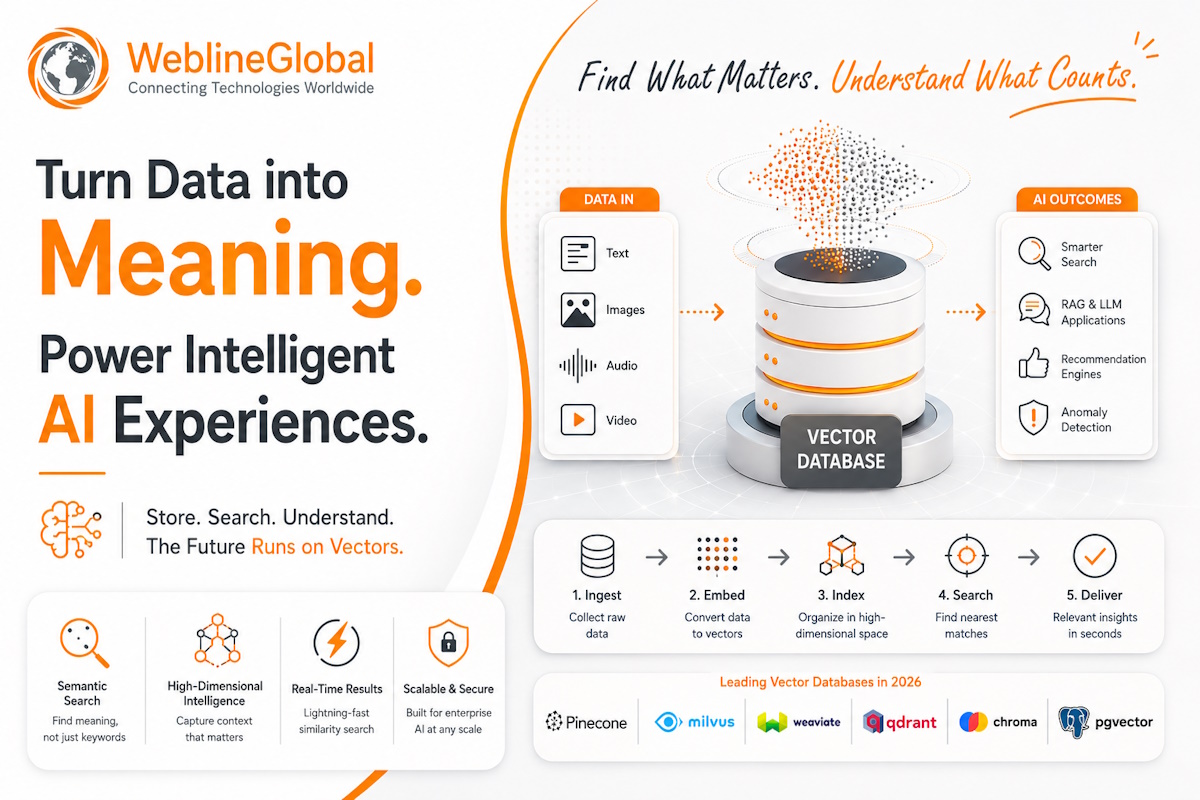
The winning approach was implementing a continuous conversational memory using a Vector Database. Instead of passing the entire raw history, we chunked user messages, embedded them and stored them in an in-memory vector store tied to the session ID. For every new user prompt, we performed a semantic search to retrieve the most relevant past exchanges and injected only those into the context window. This kept the payload small, latency low and recall near 100%.
How Do You Implement a Robust Evaluation and Memory Architecture?
To implement this, we built a two-part system: an automated evaluation pipeline to prove the issue was fixed and the actual Vector-backed memory retriever. Writing robust evaluation pipelines often leads engineering leaders to hire python developers for scalable data systems, as testing AI requires heavy data manipulation.
Below is a sanitized version of the evaluation script we used to measure recall accuracy before and after our fix:
def evaluate_memory_recall(llm_client, session_memory, target_fact, noise_turns):
    # Step 1: Inject the key fact
    session_memory.add_message("user", f"Remember this constraint: {target_fact}")
    session_memory.add_message("assistant", "Understood. I will remember this.")

    # Step 2: Inject noise (unrelated conversation)
    for i in range(noise_turns):
        session_memory.add_message("user", f"Tell me about generic topic {i}")
        # In a real test, we use a lightweight model to generate realistic noise responses
        session_memory.add_message("assistant", f"Here is information on topic {i}")

    # Step 3: Test recall
    prompt = "What was the constraint I mentioned at the beginning?"
    context = session_memory.retrieve_relevant_context(prompt) # The RAG memory injection

    response = llm_client.generate(
        system_prompt="You are a helpful assistant. Use the context to answer.",
        context=context,
        user_prompt=prompt
    )

    # Step 4: Validate
    return target_fact in response
Validation and Performance: With the Vector-backed memory (`retrieve_relevant_context`), the evaluation script passed with 99% accuracy even at 500+ turns. Because we were only injecting the top-k relevant historical chunks rather than the whole history, our token usage dropped by 70% and API latency improved significantly. When you hire software developer resources to scale AI, optimizing token usage is just as important as fixing the functional bugs.
What Are the Key Takeaways for Architecting AI Chatbot Memory?
Our journey from a failing stateless chatbot to a robust, memory-augmented conversational agent yielded several critical lessons. Organizations looking to hire dotnet developers for enterprise modernization or AI engineers should ensure their teams understand these principles:
- Never trust raw context windows: Just because an LLM accepts 100k tokens doesn’t mean it will reliably recall a fact from token 500.
- Implement “Needle in a Haystack” testing: Create automated test suites that inject facts, add massive conversational noise and test recall before pushing AI to production.
- Stateless APIs require stateful architecture: LLMs are stateless by design. You must build a robust external state management system (like a Vector DB) around them.
- Summarization is lossy: Avoid using rolling summaries for critical constraints. Use semantic retrieval to bring exact historical quotes back into context.
- Monitor token latency: Continuously appending history degrades performance. RAG-based memory keeps payload sizes consistent, ensuring stable latency regardless of conversation length.
- Separate systemic constraints from chat history: If a user states a hard rule (e.g., “no tech stocks”), treat it as a systemic parameter, not just a line in the chat log.
How Can You Future-Proof Your Conversational AI Architecture?
Building production-grade AI involves much more than connecting to an LLM API. It requires treating conversational memory as a distinct architectural layer that must be evaluated, tested and scaled independently. By moving away from raw context window stuffing and adopting semantic memory retrieval, we delivered a highly accurate, cost-effective FinTech advisor. If your organization is facing similar challenges scaling AI applications or needs dedicated engineering expertise, contact us to explore how our pre-vetted remote developers can accelerate your roadmap.
Social Hashtags
#LLM #LLMMemory #ContextEngineering #RAG #VectorDatabase #FinTechAI #ConversationalAI #AIEngineering #GenerativeAI #LLMOps #AIArchitecture #EnterpriseAI
Frequently Asked Questions
The most rigorous method is automated "Needle in a Haystack" testing. You inject a specific, unique fact, simulate a desired number of conversation turns using a script and then prompt the LLM to retrieve that exact fact. Accuracy is measured as a binary pass/fail across hundreds of iterations at different conversation lengths.
LLMs use attention mechanisms that can become diluted over long sequences. Often, models exhibit a "U-shaped" attention curve, meaning they pay close attention to the very beginning (system prompts) and the very end (latest user message) of a prompt, but lose focus on the middle context.
Not always, but it is highly recommended for long-lived sessions. For short tasks (under 10 turns), passing the raw history is fine. For enterprise applications where users return over days or weeks, a Vector DB or Graph Database is essential for semantic retrieval.
Traditional RAG retrieves data from external documents. Conversational RAG treats the user's own chat history as the external document. It embeds user messages, stores them and retrieves only the historically relevant messages to inject into the current prompt, bypassing the need to send the entire chat history.
Key metrics include Context Relevance Score (measuring if the retrieved memory matches the prompt), Token Usage per Turn (which should remain flat in a well-architected system) and User Correction Rate (how often the user has to remind the bot of something they already said).


Success Stories That Inspire
See how our team takes complex business challenges and turns them into powerful, scalable digital solutions. From custom software and web applications to automation, integrations, and cloud-ready systems, each project reflects our commitment to innovation, performance, and long-term value.

US SaaS Platform Cut Manual Ops by 70% After Hiring WeblineGlobal’s n8n Automation Pod

California-based SMB Hired Dedicated Developers to Build a Photography SaaS Platform