Table of Contents

For many Toronto-based CTOs and VPs of Engineering, the first foray into offshore development often feels like a calculated risk that did not quite pay off. You start with high hopes for cost savings and speed, but three months in, the velocity is lagging, the code quality is brittle, and the time zone gap feels like a canyon. This initial friction, often categorized as a typical offshore delivery failure Toronto businesses face, usually stems from a misalignment in expectations rather than a lack of raw technical talent. The realization that the “toss it over the wall” approach fails at scale is often the catalyst for a major strategic pivot.
Fixing these gaps requires more than just a new set of JIRA tickets. It demands a fundamental shift in how remote teams are integrated, managed, and audited. When local leadership teams decide to hire it consultants Toronto to step in, they are looking for a way to bridge the gap between their high-level business goals and the daily output of a remote engineering pod. This transition marks the move from a vendor-client relationship to a deeply integrated partnership where accountability and delivery are baked into the governance model. Recovery is not just about writing better code, it is about restructuring the entire engagement for long-term predictability and ROI.
Understanding the Root Causes of Offshore Delivery Failure Toronto
Identifying why a project stalled is the first step toward remediation. Most Toronto teams realize too late that their initial vendor lacked the senior-level oversight necessary to translate complex North American business requirements into technical specifications. This gap often leads to missed deadlines and a mounting pile of technical debt that threatens the entire product roadmap. To recover, leadership must first diagnose whether the issue was a lack of technical skill, poor communication protocols, or a complete absence of governance fixes that ensure alignment between local and remote offices.
The Disconnect Between Cost Savings and Value Delivery
Many firms enter the offshore market purely to reduce burn. While cost efficiency is a valid driver, focusing solely on the hourly rate often leads to hiring junior resources who lack the experience to navigate enterprise-grade systems. When you hire IT consultants to audit these failing projects, they frequently find that the “cheap” labor ended up costing more in rework and lost time. High-performing teams in Toronto are now pivoting toward a value-based model, where they pay for seniority and reliability rather than just headcount.
The High Cost of Poor Communication Loops
In a remote setting, silence is often a sign of trouble. If your remote team only speaks up when a task is completed, you are missing out on the proactive problem-solving that defines a senior engineer. This lack of transparency is a hallmark of early-stage offshore delivery failure Toronto teams experience. Without a culture of open communication, small misunderstandings regarding feature requirements snowball into major delivery delays that can jeopardize product launches.
Bridging the Cultural Context Gap
It is not just about the language spoken, but the business context understood. A developer might understand the syntax of Python or React, but if they do not understand the user journey of a Canadian fintech application or a local e-commerce platform, the output will feel disconnected. This is why many organizations now hire IT consultants who can act as the bridge, ensuring the remote team understands the “why” behind every user story.
Struggling with missed milestones or unstable code from your offshore team? Our experts help Toronto tech leaders diagnose delivery gaps and rebuild reliable remote development models.
Why Leaders Hire IT Consultants Toronto to Reset Strategies
When an offshore engagement begins to wobble, bringing in external expertise can provide the objective perspective needed to right the ship. Local consultants understand the specific pressures of the Toronto market, including the need for rapid scaling and the high expectations of local stakeholders. They help organizations look beyond the immediate fire and implement structural changes that prevent future delivery misses. By auditing the existing team composition, they can identify where you might need to hire enterprise developers with deeper domain expertise to stabilize the core architecture.
Auditing the Technical and Process Maturity
A common fix involves a deep dive into the CI/CD pipelines, testing automation, and documentation standards of the remote team. If the remote partner was working in a vacuum, their processes might not align with your internal standards. Consultants help synchronize these workflows, ensuring that the remote team operates as a natural extension of your local office. This alignment is critical for maintaining a high release velocity without sacrificing the stability of the production environment.
Implementing Robust Governance Fixes
Governance is often the missing piece in failed offshore attempts. Effective governance fixes include setting up clear KPIs that measure more than just hours worked. You need metrics on code churn, sprint burndown accuracy, and mean time to recovery. When you review governance setup with a partner like WeblineGlobal, the focus shifts to creating a transparent environment where every stakeholder has visibility into the development lifecycle. This reduces the risk of being blindsided by a major delay at the end of a milestone.
Transitioning to a Managed Pod Model for Better Delivery
One of the most effective ways to resolve offshore delivery failure Toronto companies encounter is to move away from hiring individual freelancers and toward managed pods. A pod is a self-contained unit that includes developers, a QA lead, and a scrum master who are all accountable for a specific functional area of your product. This structure provides the internal leadership necessary to keep the project on track without requiring the Toronto CTO to manage every granular task. It provides a level of stability that individual staff augmentation often lacks.
The Role of the Technical Lead in Remote Success
Every successful remote team needs a strong technical lead who can interface with your local architects. This lead is responsible for code reviews, mentorship, and ensuring that the team adheres to the established coding standards. If your current offshore team lacks this role, it is likely a major contributor to your delivery issues. When you hire enterprise developers through a structured model, you ensure that this level of senior oversight is already integrated into the team composition, reducing the management burden on your local leaders.
Scaling with Speed and Precision
Once the foundation is stabilized, the focus shifts to scalability. A well-governed offshore team should be able to scale up or down based on your project needs without a massive dip in productivity. This flexibility is one of the primary reasons firms hire IT consultants to build out their remote strategy. By having a pre-vetted pipeline of talent available, you can add capacity in weeks rather than the months it might take to hire locally in the competitive Toronto tech scene.
Need experienced engineers who integrate seamlessly with your team? Access pre-vetted remote developers, technical leads, and managed pods ready to stabilize your product roadmap.
Evaluating Vendor Transparency and Accountability
The relationship between a Toronto firm and its offshore partner must be built on radical transparency. If your current vendor is hesitant to provide direct access to developers or avoids discussing technical hurdles in real-time, it is a red flag. To fix offshore delivery gaps, you must demand a vendor who operates with open books and open communication channels. This includes everything from transparent pricing models to clear escalation paths when issues arise. You want a partner who is as invested in your success as you are, not one that is simply billing hours.
Intellectual Property and Security Standards
Security is a non-negotiable aspect of any modern development project. Many offshore delivery failures are compounded by a lack of rigorous security protocols, which can lead to compliance issues for Toronto businesses operating in regulated industries. Effective governance fixes must include strict IP protection, secure access controls, and regular security audits of the remote environment. When you hire enterprise developers, you are paying for their ability to work within these secure frameworks, protecting your most valuable digital assets.
The RelyShore Model: A Hybrid Approach to Reliability
WeblineGlobal utilizes a model that combines the cost advantages of India-based development with the accountability and communication standards expected by North American leaders. This approach addresses the core causes of offshore delivery failure Toronto teams face by providing US-based assurance and a delivery model that prioritizes long-term partnership over short-term gains. By integrating these two worlds, you get the scale you need with the reliability you demand.
Rebuilding the Hiring Funnel for Remote Talent
If your first attempt at offshore hiring failed, your vetting process likely needs an overhaul. You cannot rely on a resume alone when building a remote team. You need a multi-stage evaluation process that tests for technical proficiency, communication skills, and cultural fit. Many successful teams hire IT consultants to help design these technical challenges and conduct deep-dive interviews that go beyond the surface-level keywords on a LinkedIn profile.
Beyond Code: Testing for Problem-Solving and Agency
A senior developer should be able to question a requirement if they see a more efficient way to achieve the goal. This sense of agency is what separates high-value partners from simple order-takers. When you hire enterprise developers, look for individuals who have experience working in agile environments and who understand how to contribute to a collaborative design process. This proactive mindset is the best defense against the “delivery miss” that plagues poorly vetted offshore teams.
Continuous Evaluation and Performance Feedback
Hiring is not a one-time event, it is an ongoing process of evaluation and optimization. To review governance setup effectively, you must have regular performance reviews for your remote team members. This ensures that everyone remains aligned with the project goals and that any performance issues are addressed before they impact a major milestone. Continuous feedback loops help build a culture of excellence that transcends geographical boundaries.
Taking the Next Step Toward Successful Remote Delivery
The journey from a failed offshore engagement to a thriving, high-velocity remote team is one of the most rewarding transformations a tech leader can lead. It requires a willingness to admit what did not work and a commitment to implementing the necessary governance fixes to ensure it does not happen again. By choosing to hire IT consultants who understand both the local Toronto landscape and the complexities of global delivery, you position your company for sustainable growth and long-term technical excellence.
Success in offshore development is not a matter of luck; it is a matter of strategy. Whether you are looking to fix offshore delivery gaps in an existing project or you are ready to build a new dedicated team from scratch, the focus must remain on quality, transparency, and accountability. Contact the right partners, and we will help you with the right framework for management, along with the talent pool of the world, for your greatest competitive advantage.
Social Hashtags
#OffshoreDevelopment #RemoteEngineering #TorontoTech #SoftwareOutsourcing #TechLeadership #CTOInsights #EngineeringManagement #DevTeamScaling #ITConsulting #GlobalEngineering #DevOps #AgileLeadership
Ready to fix your offshore delivery challenges? Let our consultants help you redesign governance, improve communication, and build a high-performing remote engineering team.
Frequently Asked Questions
Failure often occurs due to a lack of senior-level oversight, poor cultural and business context alignment, and a focus on low hourly rates rather than total value delivery. When you hire IT consultants, they can help identify these gaps and implement better vetting and management processes.
Governance fixes involve establishing clear KPIs, communication protocols, and accountability frameworks. By ensuring everyone knows exactly what is expected and how success is measured, you reduce ambiguity and increase the predictability of your software releases.
You should look for deep technical expertise, experience in your specific industry, and the ability to work within a structured enterprise environment. It is also crucial to evaluate their communication skills and their ability to proactively solve problems rather than just following instructions.
The RelyShore model provides the cost benefits of offshore development with the security and reliability of US-based delivery standards. It focuses on transparency, IP protection, and high-quality communication, which are essential for avoiding the common pitfalls of global development engagements.
The best time to review governance setup is before you start, but the next best time is as soon as you notice signs of a delivery miss, such as missed deadlines, declining code quality, or poor communication from your current partner.




Success Stories That Inspire
See how our team takes complex business challenges and turns them into powerful, scalable digital solutions. From custom software and web applications to automation, integrations, and cloud-ready systems, each project reflects our commitment to innovation, performance, and long-term value.
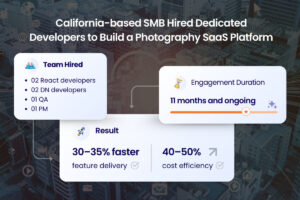
California-based SMB Hired Dedicated Developers to Build a Photography SaaS Platform
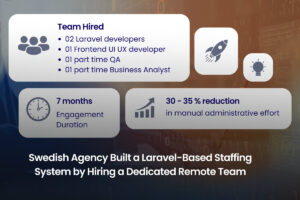
Swedish Agency Built a Laravel-Based Staffing System by Hiring a Dedicated Remote Team