
Table of Contents

INTRODUCTION
While working on an automated customer support interface for a mid-sized retail client, our team encountered a stubborn integration hurdle. The goal was to deploy a bidirectional communication channel using the WhatsApp Business API to handle post-purchase inquiries and tracking updates. We selected n8n for its workflow orchestration capabilities, intending to route incoming messages to a customized internal dashboard.
During the staging phase, we attempted to redeploy a workflow that had previously been active. We realized that the system had stopped ingesting inbound messages entirely. The logs presented a persistent error indicating that the WhatsApp App ID already possessed a webhook subscription, preventing the workflow from initializing. Attempts to manually configure the webhook in the Meta Developer portal resulted in validation failures, creating a deadlock where the automation could not run, and the platform refused to validate the endpoint.
This challenge—managing the strict single-webhook limitation of the WhatsApp API against the abstraction layer of low-code tools—inspired this article. Below, we detail how we diagnosed the state conflict and implemented a robust manual verification flow to resolve it.
PROBLEM CONTEXT
The architecture involved a standard n8n instance acting as the middleware between the Meta (WhatsApp) Graph API and the client’s CRM. For real-time communication, Meta relies on webhooks to push `messages_received` events to the subscriber. The standard n8n “WhatsApp Trigger” node is designed to abstract the complexity of this setup by automatically calling the Graph API to register itself as the webhook endpoint when the workflow activates.
However, the WhatsApp Business API enforces a strict constraint: an App ID can have only one active webhook subscription URL at a time. The issue surfaced when we attempted to switch the workflow or when a previous session had not cleanly deregistered the webhook. The n8n node detected the existing subscription and halted execution with the following error:
"The WhatsApp App ID [APP_ID] already has a webhook subscription.
Delete it or use another App before executing the trigger.
Due to WhatsApp API limitations, you can have just one trigger per App"
When we attempted to bypass the node’s auto-registration by manually pasting the n8n webhook URL into the Meta Developer portal, the portal rejected the URL. It claimed the callback URL or verify token couldn’t be validated. This created a scenario where we could neither use the automatic trigger nor manually configure the connection.
WHAT WENT WRONG
The failure stemmed from a misunderstanding of how Meta validates webhooks versus how the n8n trigger node operates.
1. The “Zombie” Subscription
Even though we deleted the previous workflow, the subscription record remained active on Meta’s side, pointing to a now-defunct webhook ID. Because n8n’s trigger node attempts to create a new subscription upon activation, it collided with the existing record.
2. The Validation Handshake Failure
When a developer manually enters a callback URL in the Meta portal, Meta immediately sends a `GET` request to that URL containing a `hub.mode`, `hub.token`, and `hub.challenge`. The endpoint must return the `hub.challenge` value in plain text to confirm ownership. The standard n8n WhatsApp Trigger node does not listen for this generic `GET` verification request unless it is currently in the “activating” phase, which it couldn’t enter due to the error in point #1.
We effectively had a “chicken and egg” problem: The workflow wouldn’t start because the subscription existed, but we couldn’t update the subscription because the workflow wasn’t running to verify the new URL.
HOW WE APPROACHED THE SOLUTION
We identified that relying on the specific “WhatsApp Trigger” node was the architectural bottleneck. This node couples the configuration of the webhook with the processing of messages.
To solve this, we decided to decouple these functions. We needed to:
- Stop asking n8n to manage the subscription lifecycle automatically.
- Manually handle the Meta verification handshake (GET request).
- Manually ingest the message payload (POST request).
This approach allows us to configure the webhook once in the Meta portal and never touch it again, regardless of how many times we update the internal logic of the workflow.
FINAL IMPLEMENTATION
We replaced the dedicated WhatsApp Trigger node with a standard n8n Webhook node configured to handle both verification and data ingestion. Here is the implementation strategy we used to fix the validation error.
Step 1: Configure the Webhook Node
We created a generic Webhook node with the following settings:
- HTTP Method: GET and POST (allow both).
- Path: `whatsapp-incoming`
- Authentication: None (security is handled via the token check logic).
- Response Mode: On receiving the verification request, we must respond immediately.
Step 2: Implement Logic for Verification vs. Notification
Meta sends a `GET` request for verification and a `POST` request for actual messages. We added a Switch (or If) node immediately after the webhook to check the HTTP method.
Path A: Verification (GET)
If the method is `GET`, we check if the query parameter `hub.verify_token` matches the string we defined in the Meta portal. If it matches, we use a Respond to Webhook node to return the `hub.challenge` value in plain text.
// Pseudo-code for the Respond to Webhook node (Expression)
{{ $json["query"]["hub.challenge"] }}
Path B: Ingestion (POST)
If the method is `POST`, this is an actual message. We pass this data downstream to our processing logic (e.g., parsing the user’s text and querying the CRM).
Step 3: Validating in Meta Portal
With the workflow active (listening), we returned to the Meta Developer portal:
- We navigated to the WhatsApp configuration page.
- We entered the Production URL from the n8n Webhook node.
- We entered the Verify Token we hardcoded in our logic.
- We clicked “Verify and Save.”
Because our workflow was now explicitly listening for the `hub.challenge` and returning it correctly, the portal validated the URL instantly. The “App ID already has a subscription” error became irrelevant because we were no longer asking n8n to create a new subscription; we were simply updating the existing one to point to a valid listener.
LESSONS FOR ENGINEERING TEAMS
This implementation highlighted several key takeaways for teams building automation on third-party APIs.
- Decouple Configuration from Logic: Pre-built “Trigger” nodes are convenient but often opaque. When reliability is critical, manually implementing standard Webhook logic provides greater control over the handshake and error handling.
- Understand the Underlying API: The error was not an n8n bug but a restriction of the Meta Graph API. Understanding the `hub.challenge` requirement was essential to solving the validation failure.
- State Management Matters: “Zombie” webhooks are common in event-driven architectures. Always verify if an upstream provider (like Meta or Stripe) is holding onto a stale endpoint before debugging local code.
- Security in Open Webhooks: When moving from a dedicated trigger to a generic webhook, you must manually implement signature verification (checking `X-Hub-Signature`) to ensure requests are genuinely from WhatsApp and not a malicious actor.
- Scalability Considerations: When companies hire python developers for scalable data systems or automation engineers, they should look for candidates who understand these protocol-level details rather than just drag-and-drop tool proficiency.
WRAP UP
By shifting from automatic trigger registration to a manual webhook verification flow, we eliminated the subscription conflict and stabilized the client’s messaging pipeline. This approach ensures that the callback URL remains valid even if the internal workflow logic changes.
For organizations looking to build resilient automated communication flows, understanding the nuances of API handshakes is critical. If you need assistance scaling your automation infrastructure or need to contact us to discuss dedicated engineering support, our team is ready to help.
Social Hashtags
#WhatsAppBusinessAPI #n8nAutomation #WebhookIntegration #LowCodeAutomation #APIIntegration #WorkflowAutomation #MetaDevelopers #AutomationEngineering
Struggling with WhatsApp webhook conflicts or failed validations in n8n?
Fix Your WhatsApp Integration




Success Stories That Inspire
See how our team takes complex business challenges and turns them into powerful, scalable digital solutions. From custom software and web applications to automation, integrations, and cloud-ready systems, each project reflects our commitment to innovation, performance, and long-term value.
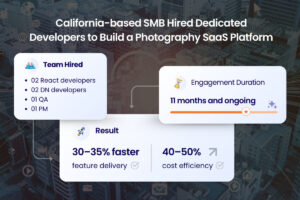
California-based SMB Hired Dedicated Developers to Build a Photography SaaS Platform
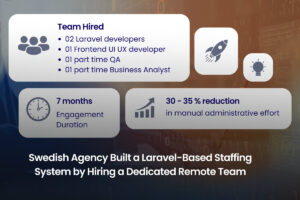
Swedish Agency Built a Laravel-Based Staffing System by Hiring a Dedicated Remote Team