Table of Contents

Small and mid-sized businesses (SMBs) today face increasing pressure to innovate quickly, offer seamless digital experiences, and compete with larger enterprises. Yet they are often limited by budget constraints and the lack of specialized in-house talent. The traditional way of hiring full-time staff not only inflates payroll but also creates long-term financial commitments that may not align with project-based needs.
This is where remote developers and on-demand developers transform the hiring landscape. They allow SMBs to access global expertise, scale up or down as needed, and build custom business apps — all without permanently increasing payroll. With a US-assured model and WeblineGlobal’s pricing advantage, SMBs gain the benefit of local accountability combined with cost-effective, world-class talent.
Want to scale your SMB without inflating payroll? Hire skilled remote developers today.
The SMB Challenge: Innovation vs Budget
Innovation is no longer optional for SMBs. Rather, it’s a survival requirement. Customers expect personalized apps, digital-first services, and fast responses. Yet many SMBs face the classic struggle: balancing innovation with budgetary limitations. Hiring full-time teams often means committing to overheads like salaries, benefits, insurance, and training, even when projects are temporary.
- Rising local hiring costs: Developers in the US often command six-figure salaries, which can quickly overwhelm an SMB’s budget.
- Payroll expansion burden: Expanding your in-house team adds permanent costs that continue even after the project ends.
- Lack of niche expertise: Most SMBs cannot maintain full-time specialists for areas like AI, cloud-native systems, or cross-platform apps.
In contrast, hiring remote developers gives SMBs the flexibility to meet these challenges head-on without compromising financial stability.
Are Remote Developers Perfect for SMBs?
SMBs thrive on agility and efficiency. Remote developers bring both by offering specialized skills at affordable costs. Instead of committing to long-term payroll, SMBs can hire remote developers for the exact expertise and duration needed.
- Payroll-Friendly Scalability: With on-demand developers, SMBs scale their teams based on project needs. No permanent salaries, just pay for hours worked and outcomes delivered.
- Access to Global Talent Pools: By working with WeblineGlobal’s development hub in India, SMBs gain dedicated developers experienced in modern frameworks, languages, and methodologies — without the expense of hiring locally.
- Faster Time to Market: Remote developers often start quickly, bypassing lengthy recruitment cycles. This accelerates project timelines and keeps SMBs competitive in fast-moving markets.
- US-Assured, WeblineGlobal-Priced Model: WeblineGlobal ensures accountability with US-based contracts and communication, while development is executed at cost-effective rates.
- Custom Business App Development: Remote developers specialize in tailoring apps to unique business needs, ensuring SMBs get solutions designed around their processes instead of one-size-fits-all products.
Staff Augmentation vs Dedicated Teams
When SMBs need to scale development capacity, choosing between staff augmentation vs dedicated teams becomes a critical strategic decision. Both models help reduce payroll load and give businesses access to specialized talent, but they serve different purposes.
Staff augmentation is best for short-term needs or specialized expertise. On-demand developers join your existing team temporarily to support feature updates, integrations, UI improvements, or seasonal workload spikes. You pay only for the hours worked, making this model highly flexible and budget-friendly.
Dedicated teams, however, function as long-term extensions of your internal staff. They provide stable capacity for ongoing product development, continuous enhancements, system maintenance, and multi-phase roadmaps. With deep integration into your workflows, dedicated teams deliver predictable output and long-term technical ownership.
The Remote Hiring Playbook for SMBs
Hiring remote developers effectively requires planning and the right approach. By following a structured playbook, SMBs can ensure they maximize productivity and cost efficiency from their teams.
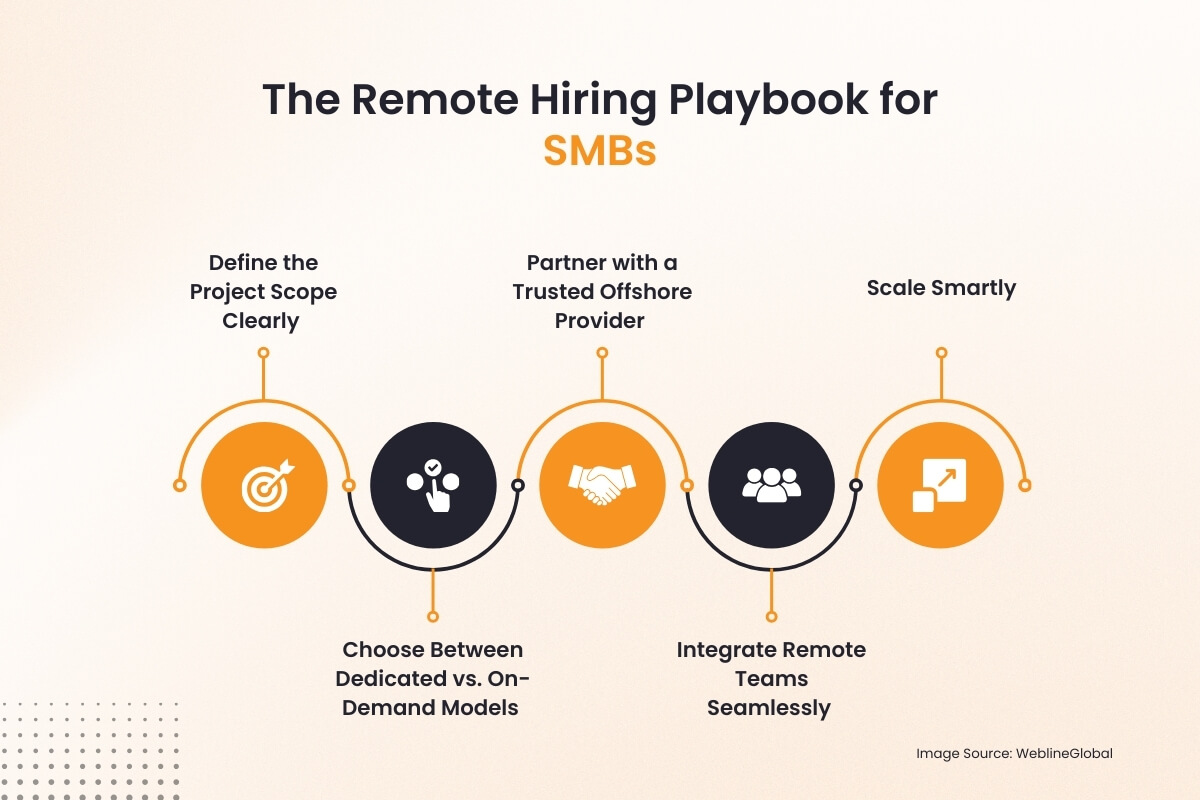
Step 1: Define the Project Scope Clearly
Before you hire remote developers, outline your project needs. Identify the type of application, required technology stacks, timelines, and measurable goals. This clarity ensures you hire the right expertise for success.
Step 2: Choose Between Dedicated vs. On-Demand Models
- Dedicated Developers: Best suited for long-term projects or continuous maintenance needs. They integrate into your team, working as virtual in-house employees with a focus on your goals.
- On-Demand Developers: Perfect for short-term or specialized needs like upgrading user interfaces, migrating data, or handling seasonal development spikes. They offer expertise without long-term commitment.
Step 3: Partner with a Trusted Offshore Provider
Working with a reliable partner like WeblineGlobal guarantees peace of mind. You get:
- US-Assured Oversight: Local accountability ensures project alignment and communication.
- Offshore Development Hub: A cost-effective and skilled team based in India.
- Transparent Pricing: No hidden costs — pay only for services delivered.
Step 4: Integrate Remote Teams Seamlessly
Remote developers thrive when integrated with collaboration tools. Platforms like Slack, Jira, Trello, and GitHub ensure smooth workflows, keeping offshore teams connected as if they were in-house.
Step 5: Scale Smartly
Begin small with one or two on-demand developers for a project. Once you evaluate their productivity and ROI, gradually scale up by bringing in dedicated developers for ongoing or larger initiatives.
Common Use Cases Where SMBs Hire Remote Developers
SMBs often turn to remote developers for projects that require specialized skills or short-term support. These scenarios demonstrate how offshore hiring delivers maximum value without inflating payroll.
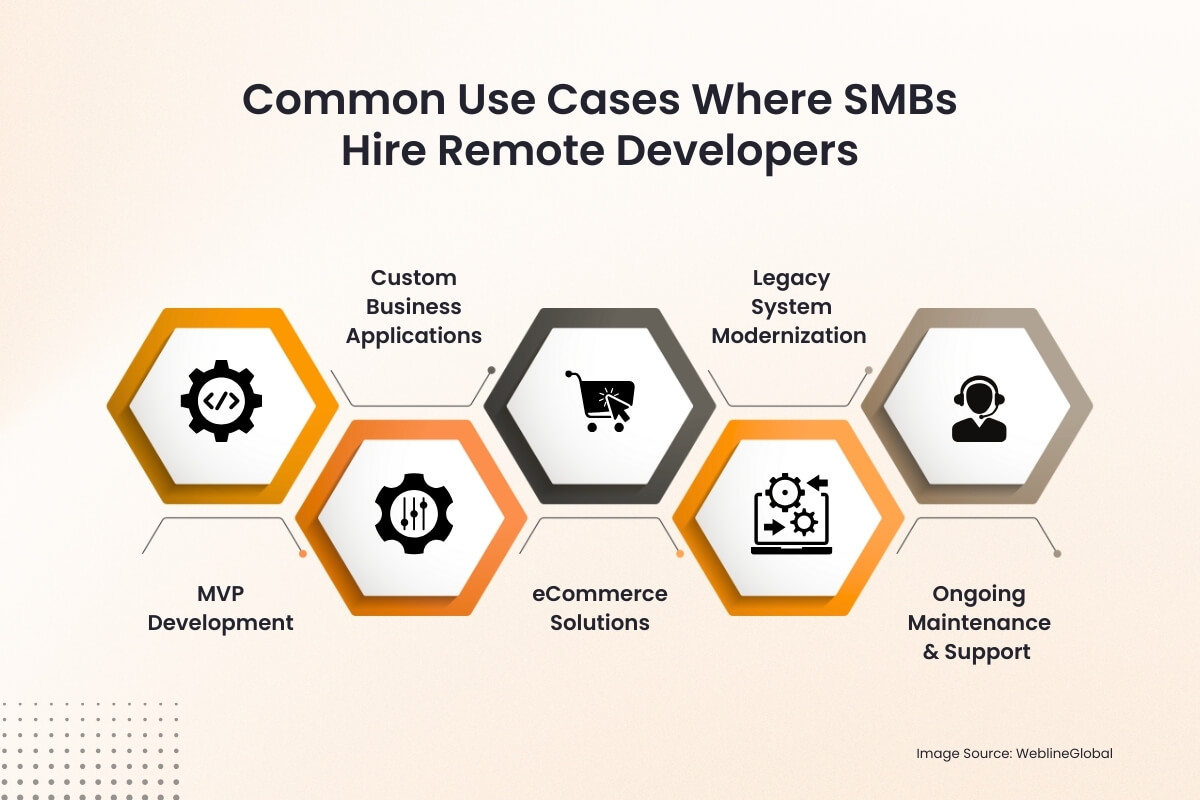
1. MVP Development
For startups and SMBs testing new products, building a Minimum Viable Product (MVP) quickly is essential. On-demand developers enable fast prototyping, letting businesses validate ideas without significant upfront costs.
2. Custom Business Applications
Every SMB has unique processes that generic software cannot fully support. Dedicated mobile app developers can create customized applications — like CRMs, HR systems, or client portals — to fit specific workflows and business needs.
3. eCommerce Solutions
Launching and scaling online stores requires expertise in platforms like Shopify, Magento, or WooCommerce. Remote developers help SMBs build secure, scalable, and mobile-ready e-commerce solutions tailored to their target customers.
4. Legacy System Modernization
Outdated systems slow businesses down. SMBs can migrate legacy systems into cloud-native architectures by hiring remote developers to ensure improved efficiency, scalability, and integration with modern business tools.
5. Ongoing Maintenance & Support
Not every SMB needs a full-time support team. On-demand developers provide cost-effective maintenance, bug fixes, and system upgrades — ensuring smooth operations without permanent staff overhead.
Cost Advantage of Remote Developers
For SMBs, managing budgets wisely is critical to survival and growth. Local hiring often drains financial resources, especially when businesses are competing with larger enterprises for top technical talent. The cost of bringing on a single senior developer in the United States can quickly spiral, not only because of base salary but also due to hidden overheads. This is where offshore hiring, through a US-assured and offshore-priced model, becomes an undeniable advantage.
The High Costs of Local Hiring
Hiring developers locally in the US can be prohibitively expensive. Beyond wages, SMBs must account for a host of additional expenses:
- Base Salary: A senior developer often earns $120,000 or more annually, depending on experience and specialization.
- Benefits and Perks: Health insurance, 401(k) contributions, paid leave, and performance bonuses add thousands of dollars per employee.
- Recruitment and Training: Hiring fees, onboarding, and skill development sessions increase overall costs significantly.
- Operational Overheads: Office space, software licenses, hardware, and HR management further inflate expenses.
For many SMBs, these costs make it impossible to scale technology teams sustainably.
Offshore Pricing Advantage
With offshore models, the equation changes dramatically. By hiring through WeblineGlobal’s India hub, SMBs access equally skilled professionals at far lower costs.
- 60–70% Savings: The same caliber of dedicated developers costs a fraction compared to US-based hires.
- World-Class Expertise: Offshore developers are proficient in modern frameworks, cloud systems, AI, mobile app development, and more.
- Predictable Budgeting: Transparent pricing ensures no surprises, making financial planning easier for growing businesses.
Save up to 70% on hiring costs with WeblineGlobal’s expert remote developers.
Pay Only for What You Use
Flexibility is another core advantage of offshore development. Instead of paying for idle time, SMBs can choose flexible engagement models:
- On-Demand Developers: Pay only for active development hours, ideal for seasonal workloads or specialized features.
- Dedicated Developers: Keep consistent support for long-term projects without carrying full-time payroll burdens.
- Scalable Teams: Ramp resources up or down based on project requirements, without the delays of traditional hiring cycles.
Strategic Reinvestment of Savings
The savings from offshore development are not just cost reductions but are opportunities for reinvestment. SMBs can redirect freed-up capital into:
- Marketing Campaigns to boost visibility and customer acquisition.
- Customer Service Improvements that enhance loyalty and retention.
- Product Innovation and R&D to stay competitive in dynamic markets.
The Bottom Line
The cost advantage of WeblineGlobal developers is more than just saving money. It’s about unlocking scalability, flexibility, and financial freedom. With WeblineGlobal’s US-assured, priced model, SMBs can confidently build high-quality, custom business apps while keeping payroll lean and predictable.
Overcoming Common Concerns
SMBs sometimes hesitate to hire remote developers due to misconceptions about outsourcing. Addressing these concerns ensures confidence in the model.
- Quality of Work: Development teams like WeblineGlobal pre-vet their dedicated developers to meet global standards, ensuring US-level quality in deliverables.
- Communication Barriers: English proficiency, overlapping working hours, and collaboration tools remove common obstacles in offshore collaboration.
- Reliability: A US-assured model ensures accountability and trust, while offshore pricing gives SMBs the affordability they seek.
With the right partner, SMBs can enjoy a seamless outsourcing experience that rivals in-house hiring.
Future of SMB Hiring: Remote-First Development
The future of work is undeniably remote. For SMBs, this means shifting from traditional payroll-heavy models to flexible, globally integrated teams. Remote developers and on-demand developers offer a sustainable path forward.
- Flexibility Over Rigidity: SMBs can adapt quickly to market changes by scaling teams up or down based on demand.
- Globalization of Talent: The best developers aren’t limited by geography. Hiring globally ensures SMBs access to top-tier talent.
- Optimized Payroll: Future-focused SMBs won’t inflate payroll; they’ll strategically hire dedicated developers and supplement them with on-demand developers as needed.
Case Example: SMB Scaling Without Payroll Expansion
Consider a mid-sized retail business in Texas needing an inventory management app.
- Local Hiring Estimate: Around $300,000 annually for a three-member full-time development team.
- WeblineGlobal Approach: One dedicated developer for backend, one on-demand developer for UI/UX, plus maintenance support.
- Outcome: The app was delivered in six months at less than 40% of the in-house cost, without long-term payroll expansion.
This showcases the effectiveness of combining affordability with expertise through offshore hiring.
Why WeblineGlobal Is the SMB Partner of Choice
SMBs across industries choose WeblineGlobal for staff augmentation because it uniquely balances local trust with offshore affordability.
- US-Based Assurance: Contracts, communication, and accountability are managed locally for confidence and reliability.
- Development Hub in India: Skilled remote developers deliver projects at offshore rates.
- Flexible Hiring Models: Businesses can choose between dedicated developers for long-term support or on-demand developers for immediate tasks.
- Domain Versatility: Developers with expertise across industries like healthcare, retail, fintech, and logistics.
- Comprehensive Lifecycle Support: From MVP to enterprise-level app development, WeblineGlobal covers every phase.
Ready to build Quality Business Apps?
SMBs cannot afford to lag in digital innovation, but expanding payroll through traditional hiring is rarely feasible. The solution lies in hiring remote developers and on-demand developers, who deliver the skills, speed, and affordability needed to scale effectively.
With a US-assured, WeblineGlobal-pricing model, SMBs get the best of both worlds: accountability and quality combined with cost savings. This model allows businesses to build custom apps, modernize systems, and stay competitive — all without inflating payroll.
The future of SMB hiring is remote, flexible, and globally integrated. With the right IT agency, SMBs can scale smarter, innovate faster, and compete confidently against enterprises many times their size.
Social Hashtags
#RemoteDevelopers #OnDemandDevelopers #SMBSuccess #StaffAugmentation #ScaleSmart #DigitalTransformation #CustomApps #WeblineGlobal #PayrollSavings
Ready to build custom apps and scale smarter with remote developers? Let’s get started.
Frequently Asked Questions
On average, SMBs save between 60–70% compared to local hiring costs. These savings come from lower base salaries, reduced overheads, and flexible models where you only pay for active development time.
Yes. Offshore hubs like WeblineGlobal’s India center provide dedicated developers who are proficient in the latest technologies, frameworks, and agile practices — ensuring the same quality as local hires.
It combines the accountability of US-based management with the affordability of offshore resources. This ensures seamless communication, predictable pricing, and high-quality deliverables without the risks of traditional outsourcing.
Absolutely. With on demand developers, SMBs can engage talent for short-term needs such as upgrades, bug fixes, or feature development without long-term commitments or payroll expansion.
Savings are often reinvested into areas like marketing campaigns, customer service improvements, or R&D. This helps SMBs grow faster while keeping tech costs lean and manageable.


Success Stories That Inspire
See how our team takes complex business challenges and turns them into powerful, scalable digital solutions. From custom software and web applications to automation, integrations, and cloud-ready systems, each project reflects our commitment to innovation, performance, and long-term value.
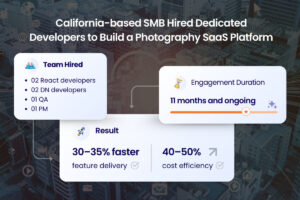
California-based SMB Hired Dedicated Developers to Build a Photography SaaS Platform
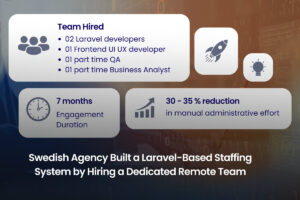
Swedish Agency Built a Laravel-Based Staffing System by Hiring a Dedicated Remote Team