Table of Contents

The finance industry in 2026 is undergoing a major change driven by the rapid advancement of technology and changing investor expectations. PwC’s baseline projections suggest that assets under management (AUM) by asset and wealth managers could expand from roughly US$139 trillion today to US$200 trillion by 2030, reflecting a compound annual growth rate (CAGR) of 6.2%.
Some other statistics follow:
- North America is expected to maintain its position as the largest market, also growing at 6.2% CAGR.
- However, the Asia-Pacific region is forecast to lead in growth momentum, with a CAGR of 6.8%.
- Other regions will contribute steadily: Latin America (6.6%), the Middle East and Africa (6.3%), and Europe (5.6%).
- Meanwhile, the pool of investable wealth worldwide is projected to rise from US$345 trillion in 2024 to US$482 trillion by 2030, expanding at a CAGR of 5.7%.
Much of this increase will be fueled by demographic and structural changes, particularly among Mass Affluents (5.7% CAGR) and high-net-worth individuals (HNWIs), one of the fastest-growing investor segments, expected to grow at 6.5% CAGR.
Ready to eliminate manual reporting errors and scale your wealth firm efficiently?
The Shift Toward Automation of Wealth Management Processes
For decades, wealth management firms operated on a foundation of manual data entry, physical documentation, and periodic updates. However, the modern era demands a more agile approach.
Replacing manual reporting with an automated wealth management process is no longer a luxury for the elite few; it is a fundamental requirement for any firm seeking to remain relevant and competitive in an increasingly digital world.
Traditional reporting methods are characterized by their labor-intensive nature. Advisors and back-office staff often spend dozens of hours every month collecting data from disparate sources, reconciling discrepancies, and manually formatting reports. This old-fashioned model is fraught with risks and inefficiencies.
In contrast, wealth management automation offers a path toward greater accuracy, improved client satisfaction, and significant cost savings.
The Hidden Costs of Manual Reporting
While many firms are comfortable with their existing processes, the hidden costs of manual reporting are substantial. These costs are not always visible on a balance sheet but manifest in lost time, human error, and missed opportunities.
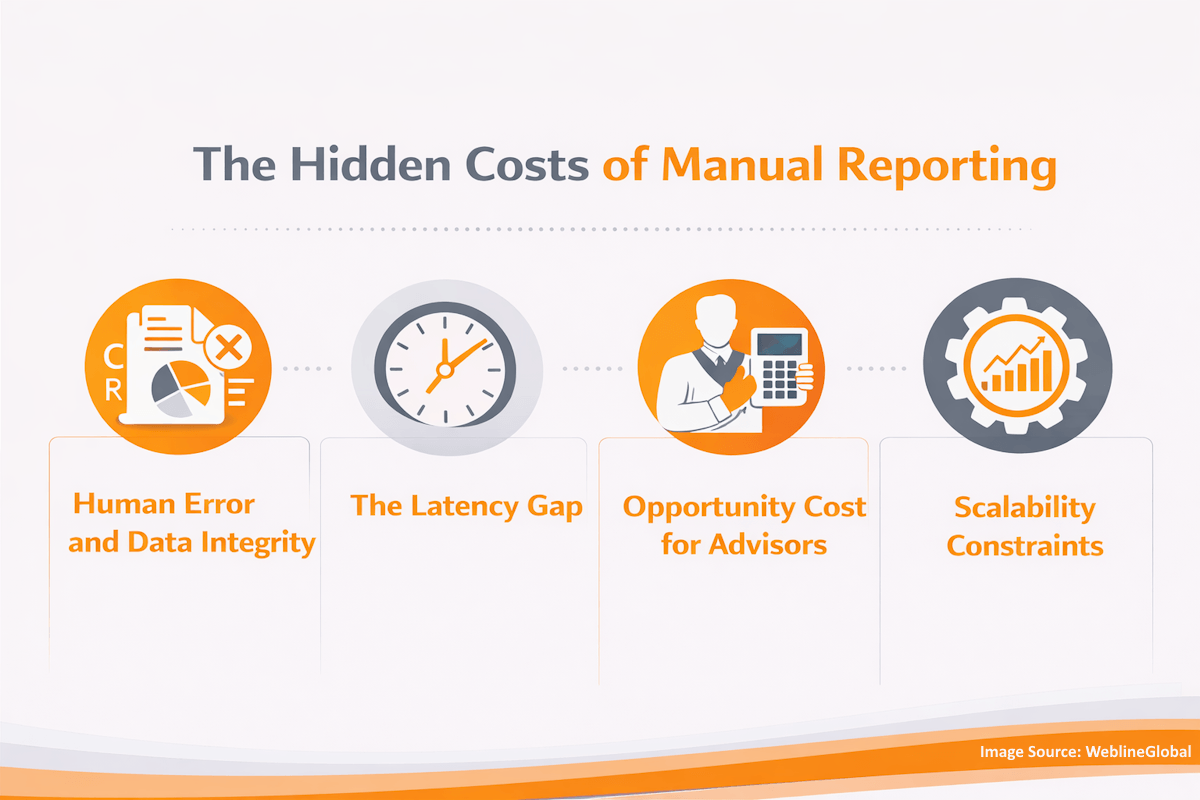
Human Error and Data Integrity
Manual data entry is inherently prone to mistakes. Even the most diligent professional can misplace a decimal point or overlook a transaction when dealing with thousands of data points. Such errors can lead to inaccurate performance metrics, which in turn damage the trust between the advisor and the client. Building a robust automation wealth management process eliminates the human element from data transfer, ensuring that the information remains pristine from the source to the final report.
The Latency Gap
In a world where information moves at the speed of light, monthly or quarterly reports are often outdated by the time they reach the client’s desk. Manual processes create a significant lag between a market event and the reporting of its impact. Modern investors expect to see the status of their portfolios in real-time. Wealth management automation bridges this gap, providing on-demand access to current data.
Opportunity Cost for Advisors
The most valuable asset an advisor possesses is their time. When high-level professionals are bogged down by administrative tasks like report generation, they have less time to spend on strategic planning, business development, and relationship building. Automating these repetitive tasks allows advisors to focus on what they do best: providing expert financial guidance.
Scalability Constraints
A firm that relies on manual reporting will eventually hit a growth ceiling. To take on more clients, they must hire more administrative staff, which increases overhead and reduces profit margins. Implementing an automation wealth management process allows a firm to scale its operations exponentially without a linear increase in headcount.
Transforming the Client Experience
The ultimate goal of any wealth management firm is to provide exceptional service to its clients. The way a firm reports its performance is a direct reflection of its brand and its commitment to transparency.
Real-Time Transparency
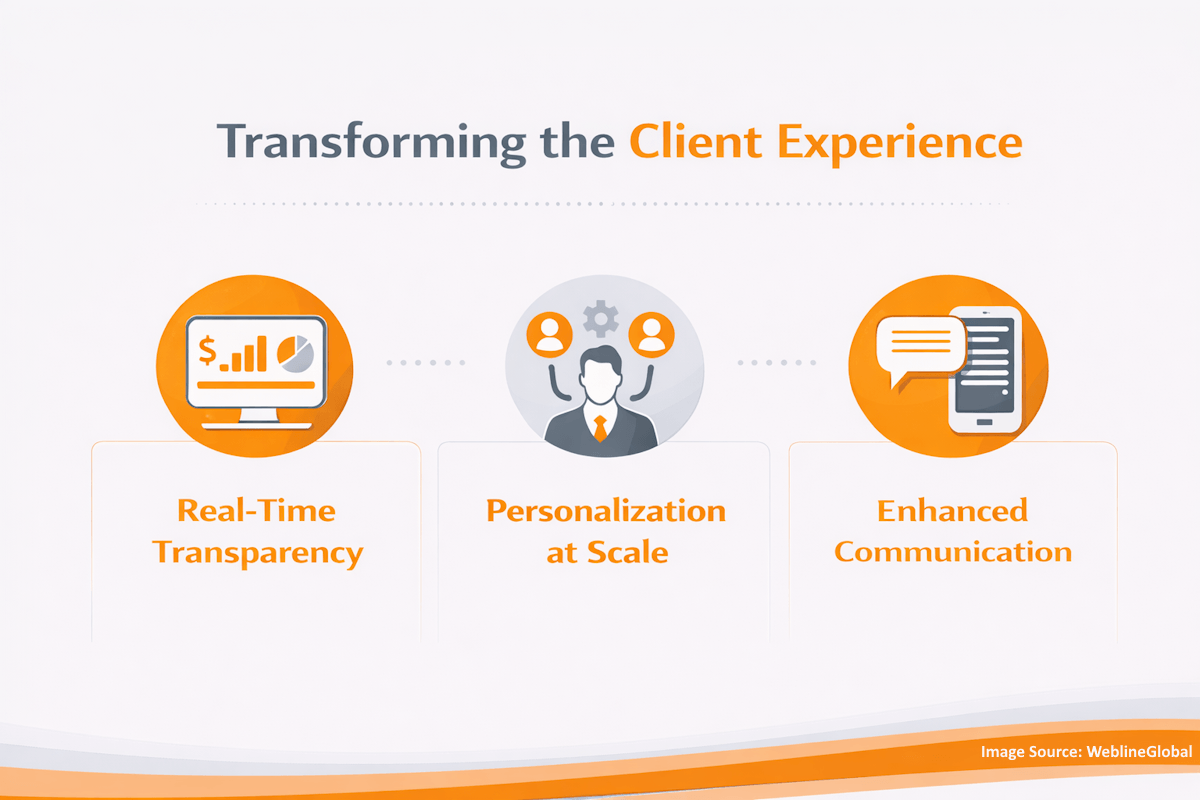
Today’s investors are accustomed to the seamless interfaces of modern banking and fintech apps. They want to be able to log into a portal at any time and see their net worth, asset allocation, and historical performance. Wealth management automation facilitates this by feeding data directly into client portals, offering a level of transparency that was previously impossible.
Personalization at Scale
Every client has unique goals and preferences. One investor might be focused on tax-loss harvesting, while another is more concerned with the environmental, social, and governance (ESG) impact of their holdings. Manual reporting makes it difficult to customize every report. However, with wealth management automation, firms can easily generate bespoke reports tailored to the specific interests of each client, providing a more personalized and meaningful experience.
Enhanced Communication
Reports should be a conversation starter, not just a static document. Automated systems can include interactive elements, allowing clients to click on specific assets for more information or run hypothetical scenarios. This encourages a deeper level of engagement and helps clients feel more connected to their financial journey.
Want to deliver real-time, personalized insights to your clients effortlessly?
Technical Foundations of an Automation Wealth Management Process
Creating a truly automated reporting system requires more than just a new software package. It requires a holistic approach to data management and integration.
Data Aggregation Engines
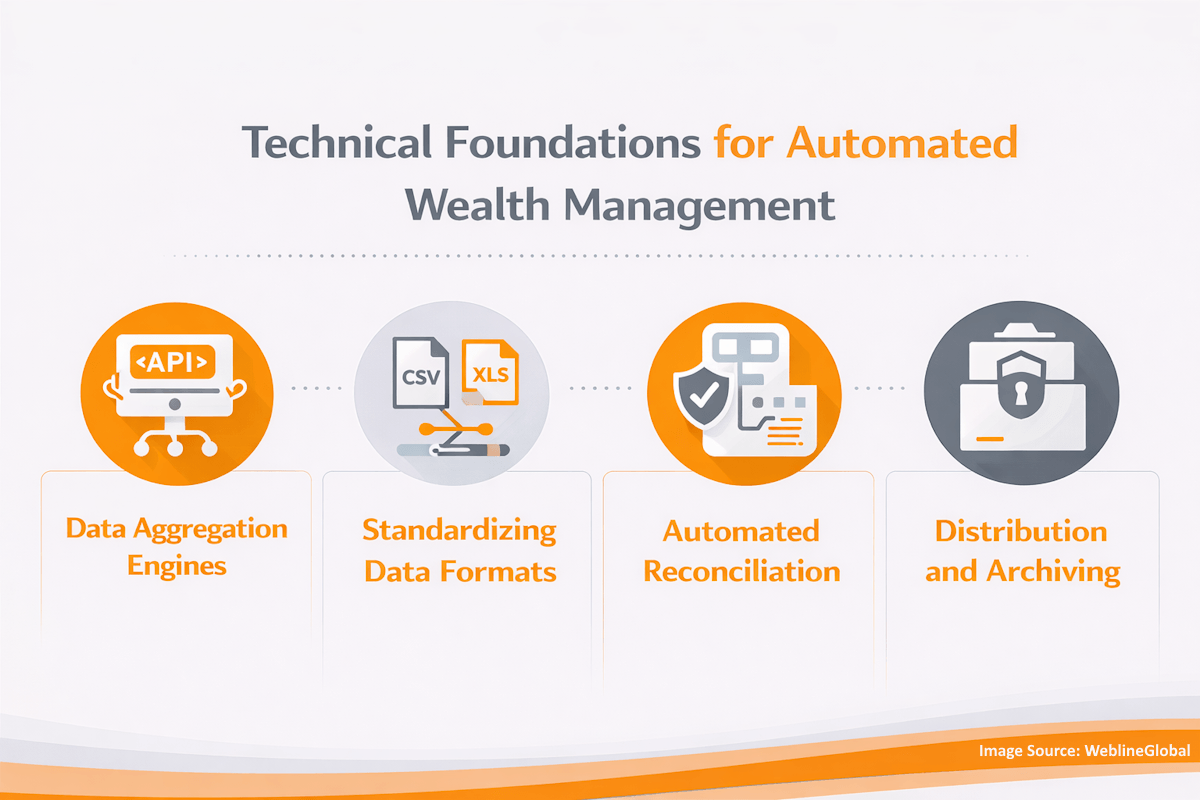
The first step in wealth management automation is the ability to aggregate data from a wide variety of sources. This includes traditional bank accounts and brokerage houses, but also more complex assets like private equity, hedge funds, real estate, and digital assets. Using APIs (Application Programming Interfaces) allows systems to talk to each other directly, pulling in data automatically without manual intervention.
Standardizing Data Formats
Data coming from different custodians often arrives in different formats. An effective automation wealth management process includes a data normalization layer that standardizes this information into a consistent format. This ensures that calculations like Internal Rate of Return (IRR) or Time-Weighted Return (TWR) are accurate and comparable across all accounts.
Automated Reconciliation
One of the most tedious parts of manual reporting is reconciling accounts to ensure that the ending balance of one period matches the beginning balance of the next. Wealth management automation software can perform these checks automatically every day, flagging discrepancies for review as soon as they occur rather than waiting until the end of the month.
Distribution and Archiving
Once a report is generated, it must be delivered securely and archived for compliance purposes. Automated systems can trigger secure notifications to clients, upload reports to a private vault, and maintain a permanent record of all communications, satisfying both the client’s need for convenience and the regulator’s need for transparency.
Overcoming Internal Resistance to Change
Digital transformation is as much about people as it is about technology. Many firms face internal resistance when moving toward wealth management automation.
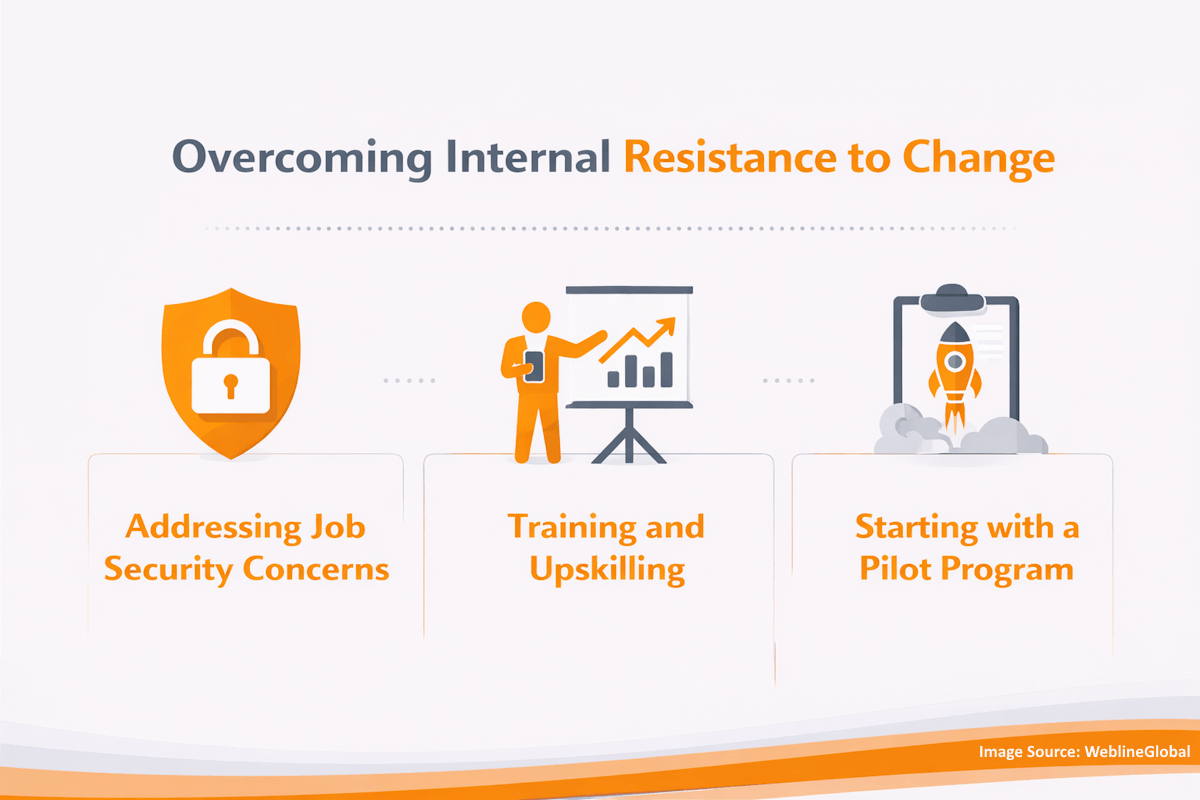
Addressing Job Security Concerns
Staff members who have spent years managing manual processes may fear that automation will make their roles obsolete. It is important to communicate that an automation wealth management process is designed to augment their capabilities, not replace them. By removing the drudgery of data entry, staff are freed up to take on more analytical and client-facing roles.
Training and Upskilling
Adopting new technology requires a commitment to training. Firms must invest in their employees to ensure they know how to use the new tools effectively. This transition often leads to a more digitally literate workforce that is better equipped for the future of the industry.
Starting with a Pilot Program
Attempting to automate everything at once can be overwhelming. A better approach is to start with a pilot program for a small group of clients or a specific type of asset class. This allows the firm to refine its wealth management automation strategy and demonstrate success before rolling it out across the entire organization.
Regulatory Compliance and Security
In the financial world, security and compliance are non-negotiable. Moving away from manual processes can actually improve a firm’s standing in these areas.
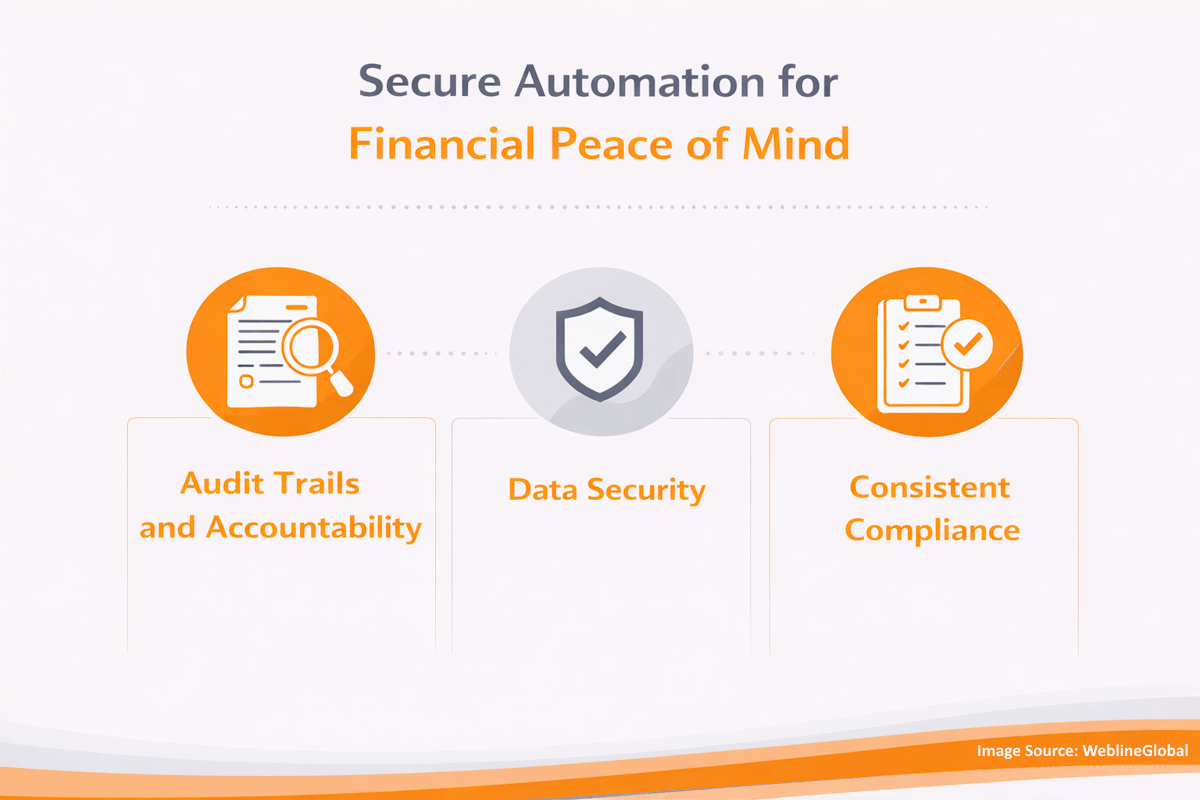
Audit Trails and Accountability
Manual spreadsheets are notoriously difficult to audit. It is often impossible to tell who changed a cell or when a mistake was introduced. Wealth management automation provides a clear, timestamped audit trail for every action taken within the system. This level of accountability is highly valued by regulators and provides peace of mind for firm leadership.
Data Security
Sending sensitive financial reports via unencrypted email is a major security risk. Automated reporting platforms typically use enterprise-grade encryption and secure client portals to ensure that data remains protected. In an era of increasing cyber threats, wealth management automation is a critical component of a firm’s security posture.
Consistent Compliance
Regulations such as those from the SEC or FINRA require consistent and accurate reporting. Automated systems can be programmed with built-in compliance checks that flag potential issues before a report is ever finalized. This reduces the risk of costly fines and reputational damage.
The Strategic Advantage of Automation
The transition to an automation wealth management process provides a significant strategic advantage. It allows firms to be more proactive rather than reactive.
Predictive Analytics
When data is centralized and automated, firms can begin to use predictive analytics to identify trends and opportunities. For example, the system could flag clients who have high cash balances that could be invested, or identify portfolios that have drifted from their target allocation. Wealth management automation turns historical data into actionable intelligence.
Improved Profitability
Efficiency leads directly to profitability. By reducing the time spent on manual reporting, firms can lower their cost-to-serve. This allows them to offer more competitive pricing to clients while still maintaining healthy margins.
Attracting Top Talent
Younger advisors and back-office professionals want to work at firms that use modern technology. A firm that is stuck in the era of paper and pens will struggle to attract and retain the best talent. Investing in wealth management automation is an investment in the firm’s future workforce.
Implementing the Right Solution
Choosing the right technology partner is the most critical decision in the automation journey. Firms should look for solutions that are flexible, scalable, and built specifically for the needs of wealth management.
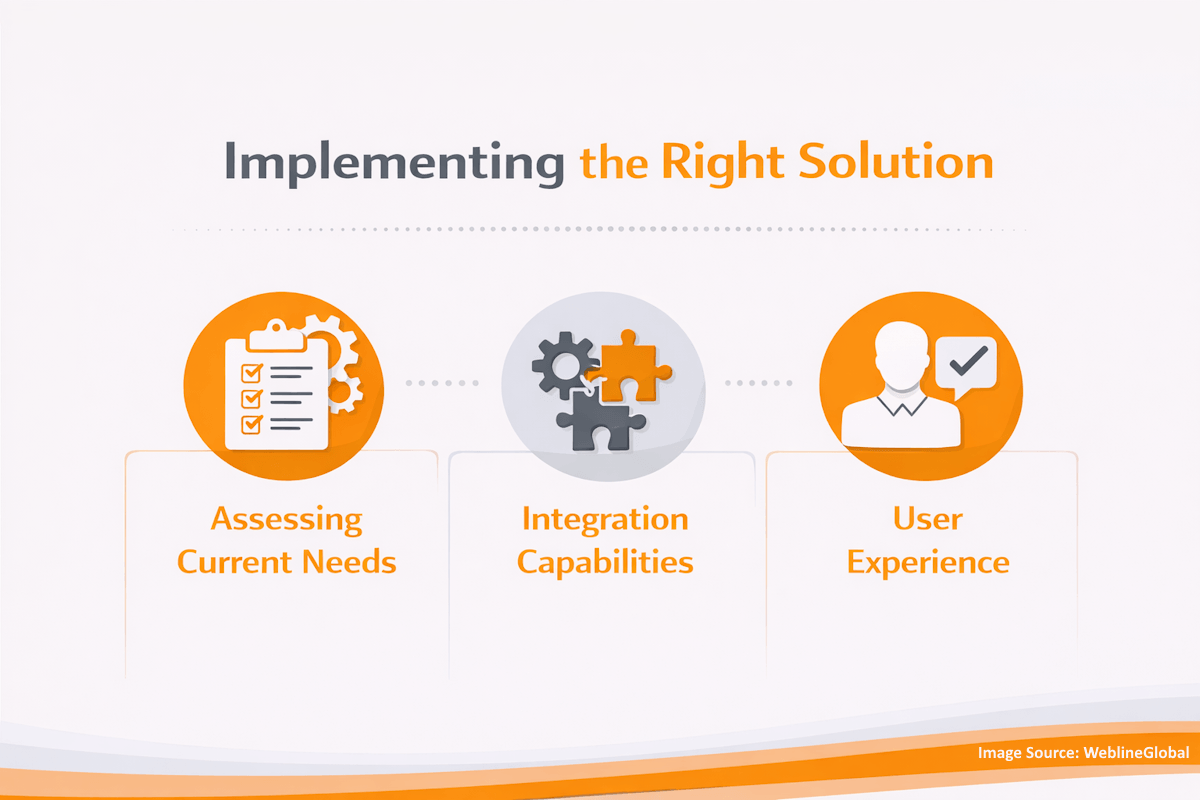
Assessing Current Needs
Before looking at software, a firm must clearly define its pain points. Are they struggling with data accuracy? Is the reporting cycle taking too long? Understanding these needs will help in selecting an automation wealth management process that delivers the most value.
Integration Capabilities
The new system must be able to integrate seamlessly with existing CRM, accounting, and custodian platforms. A siloed automation tool will only create more work in the long run. Wealth management automation should act as a bridge, connecting all parts of the business.
User Experience
The software must be intuitive for both the staff and the clients. If the interface is too complex, adoption will be slow. A successful automation wealth management process should feel natural and enhance the daily workflow of the team.
Future Trends in Wealth Management Automation
The world of automation is constantly evolving. We are currently seeing several trends that will shape the future of the industry.
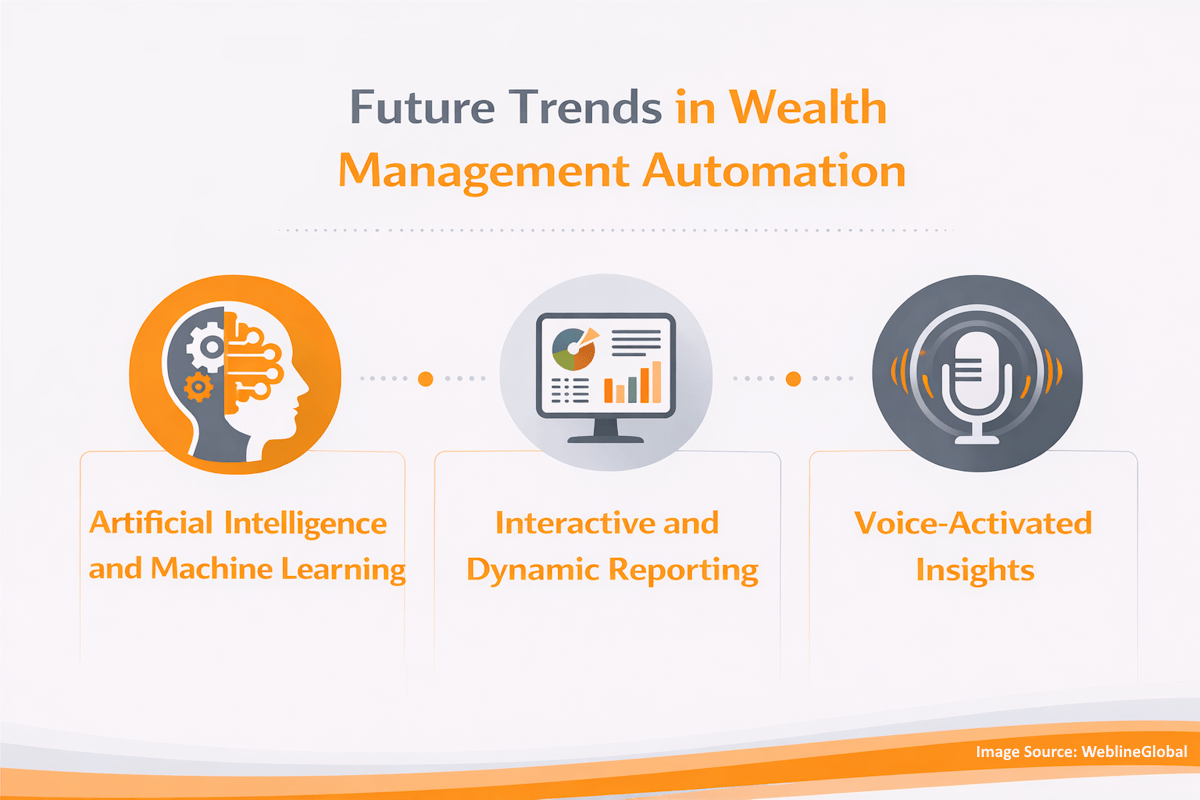
Artificial Intelligence and Machine Learning
AI is being integrated into wealth management automation to provide even deeper insights. Machine learning algorithms can identify patterns in data that a human might miss, providing advisors with a more nuanced view of market trends and client behavior.
Interactive and Dynamic Reporting
The static PDF is becoming a thing of the past. Future reports will be fully interactive, allowing clients to manipulate data and visualize different outcomes in real-time. This level of engagement is a direct result of advances in wealth management automation.
Voice-Activated Insights
As natural language processing improves, we may see advisors and clients using voice commands to access reporting data. Imagine an advisor asking their system to show them all clients with a certain exposure to a specific sector, and having the data appear instantly. This is the ultimate goal of an automation wealth management process.
New Era for Wealth Firms with WeblineGlobal’s Wealth Management Automation
The transition from manual reporting to automation is a transformative journey that touches every aspect of a wealth management firm. Hire IT consultants for an automation wealth management process to eliminate errors, improve efficiency, and provide a client experience that meets the demands of the modern era. The initial investment in technology and change management is far outweighed by the long-term benefits of scalability, profitability, and client loyalty.
Wealth management automation is not just about saving time; it is about empowering advisors to provide better advice and helping clients achieve their financial goals with greater confidence. The firms that make this shift today will be the ones that thrive in the decades to come.
As you look to navigate this complex technological landscape, having the right partner makes all the difference. WeblineGlobal is a US-based company with an offshore development hub in India called WeblineIndia. This structure ensures that enterprises receive US-standard quality, strategic oversight, and clear communication while benefiting from the cost efficiencies of offshore prices. Our team has extensive experience in building custom software and implementing sophisticated wealth management automation solutions that drive growth and operational excellence.
Modernizing your reporting process is the first step toward a more efficient and client-centric future. For more information on how we can help you build a robust automation wealth management process, visit us at www.weblineglobal.com and www.weblineindia.com.
Social Hashtags
#WealthManagement #AssetManagement #Fintech #WealthTech #FinancialServices #DigitalTransformation #Automation #BusinessAutomation #AIinFinance #SmartReporting #DigitalFinance #OperationalEfficiency #BusinessGrowth #FutureOfFinance #InnovationInFinance #RealTimeData #FinancialAdvisors #InvestorExperience #ScalableSolutions
Looking to modernize your reporting process with secure automation solutions?
Frequently Asked Questions
Transitioning to an automation wealth management process significantly reduces the time spent on administrative tasks. This shift minimizes human error in data entry, ensures consistent report formatting, and provides clients with near real-time access to their financial performance. By removing manual bottlenecks, firms can scale their operations efficiently and focus more on strategic client advisory services.
Reliability is a cornerstone of wealth management automation. Automated systems use direct API integrations to pull data from custodians and market feeds, eliminating the risk of transposition errors that occur during manual entry. These systems also include automated reconciliation tools that flag discrepancies immediately, ensuring that the information presented to clients is always precise and verified.
Small firms stand to benefit significantly from an automation wealth management process because it allows them to compete with larger institutions. By leveraging cloud-based platforms and modular software solutions, smaller practices can manage a high volume of accounts without needing a massive back-office staff. This technological leverage is essential for sustainable growth in a crowded market.
Modern technology is designed to augment human expertise rather than replace it. Wealth management automation handles the repetitive and data-heavy tasks of reporting and aggregation, which frees advisors to spend more time on complex financial planning and relationship management. Clients still value the emotional intelligence and personalized guidance that only a human professional can provide.
Security is a top priority in any automation wealth management process. Modern platforms use enterprise-grade encryption for data at rest and in transit. They also utilize secure client portals for report delivery, which is far safer than sending sensitive financial documents via email. Additionally, automated systems maintain detailed audit trails, providing a clear record of who accessed or modified data.
The timeline for implementing wealth management automation varies depending on the complexity of the firm existing data and the number of integrations required. A phased approach often works best, starting with a pilot program for specific account types. While the initial setup may take several weeks or months, the long-term gains in efficiency and client satisfaction provide a rapid return on investment.
Choosing the right development partner is crucial for a successful digital transformation. WeblineGlobal is a US-based company with an offshore development hub in India called WeblineIndia. This unique model allows wealth management firms to receive US-standard quality, strategic consulting, and seamless communication while benefiting from the competitive pricing of offshore development. Our expertise ensures that your wealth management automation is secure, scalable, and perfectly aligned with your business goals.



Success Stories That Inspire
See how our team takes complex business challenges and turns them into powerful, scalable digital solutions. From custom software and web applications to automation, integrations, and cloud-ready systems, each project reflects our commitment to innovation, performance, and long-term value.
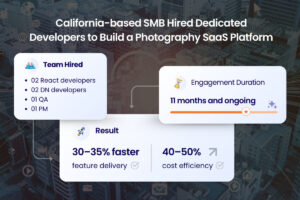
California-based SMB Hired Dedicated Developers to Build a Photography SaaS Platform
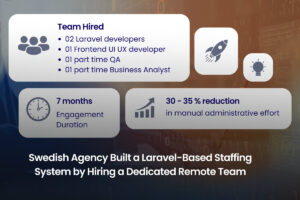
Swedish Agency Built a Laravel-Based Staffing System by Hiring a Dedicated Remote Team